

Natural Remedies for Female and Male Hair Loss
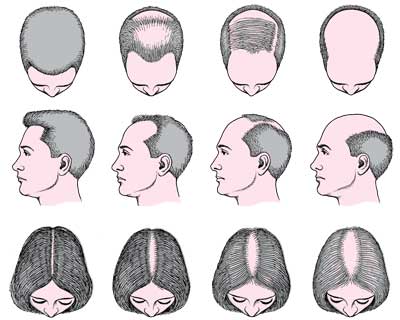
May 13, 2009 Written by JP [Font too small?]Hair loss and thinning hair are common problems in both men and women. We’ve known for some time that male pattern baldness is largely due to genetics and a hormonal process that typically accompanies aging. But, the American Academy of Dermatology estimates that approximately 30 million women in the USA are also dealing with some form of alopecia.
Currently, there are several conventional options for dealing with hair loss in both sexes. The choices range from over-the-counter topical treatments such as Minoxidil (Rogaine) to prescription medications like Finasteride (Propecia) and in some instances, surgical options and hair transplantation.
There’s some emerging research that points to natural alternatives for addressing poor hair quality as well. Many of these holistic options only have preliminary evidence to support their use. But, they do offer hope for those who have not found success with conventional therapies or who have discontinued their use due to side effects or other complications.
Before I list some of the most promising alternatives, I want to emphasize that it’s vital to have a complete medical work-up if you’re experiencing unexpected hair loss. By that I mean loss that occurs suddenly or that doesn’t appear to be related to any recent hormonal change, new medication, physical or psychological trauma, dramatic weight loss or genetic predisposition.
A skilled physician can also help determine whether thinning or loss is due to a nutritional deficiency such as a lack of iron, protein or zinc. They will likely test thyroid function and review any medications being taken. A detailed hormonal panel may also be ordered to rule out any shift that may be contributing to the declining health of the hair follicles. There are even certain infections and autoimmune conditions, such alopecia areata, which cause hair to fall out in circular patches. If all tests come back as normal and you’re looking for a natural approach, here are some options that may be worth considering:
- Flaxseeds: A four week study was recently conducted on 33 women with poor hair quality. Their ages ranged from 45-55. The female participants found an improvement in luster, shine and softness after the use of 16 grams daily of flaxseed meal. A dramatic decrease in oiliness, without any drying-effect, was also noted. A prior study utilizing a 250 mg flax extract found that hair loss was reduced in 9 out of 10 men over the course of a 6 month trial. 8 of the men were classified as showing “modest improvement”. One man showed “much improvement” and the one remaining volunteer did not exhibit any benefit. The benefits were registered based on the number of daily hairs lost and the degree of scalp oiliness. (1,2)
- Tocotrienols: Vitamin E isn’t just one isolated chemical. The most popular form of E that we find in supplements is called “alpha tocopherol”. In many foods, a different type of E (gamma tocopherol) is commonly present. But there’s another side to the Vitamin E family: the tocotrienols. Tocotrienols are generally extracted from palm fruit and/or rice bran. They are powerful antioxidants which have been extensively studied for their health effects in the body. The most common areas of scientific interest generally involve their impact on cancer and cardiovascular disease. But new data points to their potential in the management of hair loss as well. An 8 month study on 28 healthy adult males found that 100 mg of palm tocotrienols increased hair growth in those with male pattern baldness by 42%. (3)
- EGCG (Green Tea Extract): A 6 month study in mice with hair loss demonstrated a 33% increase in hair growth when they were given a green tea extract daily. A control group, which did not receive the green tea, showed no hair regrowth. A separate study performed in test tubes and in humans showed that EGCG “stimulates human hair growth”. These findings suggest a possible oral and topical use for this health promoting nutritional supplement. (4,5,6)
- Silica: Silica is a trace mineral that is believed to support the health of connective tissue such as collagen (found in cartilage and skin) and keratin (found in hair and nails). A 2007 study provided 10 mg of “choline-stabilized orthosilicic acid” (Biosil) to 48 women with thin hair. By the end of the 9 month study, the women receiving the Biosil exhibited less hair breakage, greater elasticity and improved hair thickness. A 2005 experiment on 50 women found a decrease in hair loss, nail brittleness and skin roughness after 20 weeks of silica supplementation. (7,8)
- Biotin: Biotin is a micro-member of the B-vitamin family. It’s only necessary in very small quantities, but if you’re deficient, symptoms such as falling and thinning hair may result. The beauty of this supplement is that it also plays a role in blood sugar management and strengthening nails and skin. A rather large dosage, typically 2-10 mgs, is often recommended. It’s best to split up the dosage throughout the day. (9,10,11,12,13,14)
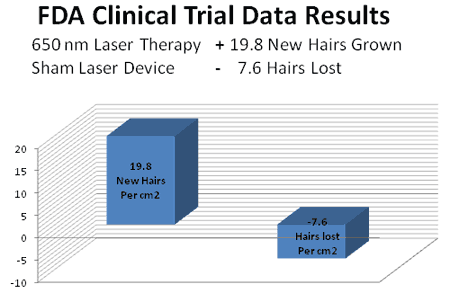
- Laser Therapy: Laser phototherapy is a treatment that can be administered in dermatology clinics or applied at home. It employs the use of “near infrared lights” to combat scalp inflammation and promote the growth cycle of follicles. A study published in 2009 found that a “lasercomb” improved the hair growth pattern of 110 men with hormonally influenced hair loss. No adverse effects were noted. Other forms of hair loss, such as alopecia areata, may also respond to laser therapy. (15,16)
- Apple Extract: A class of antioxidants contained in apples, grapes and various other fruits and vegetables may stimulate the growth of hair in a similar manner as Minoxidil. A 12 month Japanese trial suggests that apple proanthocyanidins may be effective for men with male pattern baldness. 21 Japanese men demonstrated improvements in hair growth, as compared to a placebo, at both the 6 and 12 month mark of the study. The effects became more significant with time and no side effects were reported. The authors of the experiment concluded that, “procyanidin therapy shows potential hair growing activity”. Two previous studies from 2001 and 2000 also support these findings. (17,18,19)
In addition to these alternatives, I would also mirror the advice given by Dr. Andrew Weil. He suggests supplementing with healthy fats such as fish oil and GLA, which can be found in black currant seed oil, borage oil, evening primrose oil and hemp oil. (20) I also recommend following a diet that is rich in antioxidants and anti-inflammatory foods, low in sugar and adequate in protein. If you’re trying to lose weight, make sure to do so in slow and steady manner. Select nutrient dense, whole foods that provide vital minerals and vitamins as you shed the excess weight. It’s almost always a good idea to also take a high potency multivitamin/mineral to provide added insurance against common deficiencies.
In terms of topical products, try to use the mildest, most natural hair care products available. Avoid products with harsh cleansing agents, artificial colors, preservatives and synthetic perfumes. You can even invest in a chlorine filter for your shower. Chlorine is a powerful antiseptic, but can dry and irritate the hair, scalp and skin. The general idea is to avoid anything that dries out or inflames the follicles and promotes hair breakage.
Hair loss and thinning should be approached in the same way that we address all other health issues. Firstly, try to identify the true cause of the problem. Secondly, start by working from the inside-out. You can always add an outside-in strategy to complement later. Finally, utilize the safest and most natural options whenever possible. Aggressive, conventional therapies may be necessary, but they shouldn’t always be the first choice. By following these basic steps you may be able to improve the actual health of your hair and more importantly, the overall condition of your health.
Note: Please check out the “Comments & Updates” section of this blog – at the bottom of the page. You can find the latest research about this topic there!
Be well!
JP
Tags: Flax, Green Tea, Hair
Posted in Alternative Therapies, Men's Health, Women's Health
May 14th, 2009 at 12:22 pm
Thank you for this timely article !
As yall know I am recently experiencing hair loss, so this article really applies.
If yall ARE doing low carb, it is very important as Harry states, to lose the weight ‘gradually’. Not only can other physical problems result (i.e. hair loss), but also you tend to lose your muscle tone as well, and the excess skin will start to sag.
I was not aware that there were SO many different regimens for dealing with hair loss. Especially interesting was the ‘flaxseed’.
Thanks again. I learned a LOT.
Bayoubabe
May 14th, 2009 at 4:08 pm
Bayoubabe,
Thank you for the kind comments and your advice for other readers. Any diet and/or weight loss surgery sometimes results in loss or thinning of hair. Keeping the nutrients up and the weight loss at a “slow and steady” rate can help mitigate that common occurrence.
I hope that you’ll find the best possible solution for your hair loss.
Be well!
JP
May 17th, 2009 at 10:48 am
Alopecia is an unnatural hair loss that can me quite severe. It is usually caused by stress.
My daughter at age 7 lost half her hair to alopecia. We saw a specialist and it was just a matter of monitoring her and easing the stress and her hair grew back in about 12 months.
May 17th, 2009 at 3:37 pm
Thanks for relaying your daughter’s experience with alopecia areata. I agree that stress can contribute to hair loss. Managing stress is vitally important to the promotion of every type of health – including healthy hair.
Be well!
JP
May 28th, 2009 at 4:40 pm
You’re very welcome!
Be well!
JP
June 4th, 2009 at 7:12 am
i was looking for this type of site only, that would provide me with home measures of hair loss. i really liked all your above points and feel that you are really good at work. i think i should better start trying hard.
June 4th, 2009 at 2:31 pm
Thanks, Sophia.
Be well!
JP
June 9th, 2009 at 1:31 am
Thanks JP for the useful article. Everyone loves to have long, smooth and silky hair. Hair loss is a major problem faced by both men and women. Laser Therapy is very popular and has no side effects.
June 9th, 2009 at 12:08 pm
You’re welcome, Glenn.
Be well!
JP
September 28th, 2009 at 10:44 pm
It is always advisable to go for natural treatment rather than the medications.
September 29th, 2009 at 12:29 pm
I think it’s always a good idea to first consider a natural alternative. I only consider medications if more natural methods aren’t affordable, available or effective. A case by case decision always needs to be made, IMO.
Be well!
JP
October 8th, 2009 at 1:42 am
I do believe in natural treatments for hair loss, as they are safe and do not carry any side effects. Thanks for sharing the info on natural treatments.
October 8th, 2009 at 12:45 pm
You’re welcome!
Be well!
JP
December 16th, 2009 at 9:26 pm
Good article JP. It would be interesting to hear from any users of laser therapy if they have faster benefits if they supplement with flaxseed while undergoing laser treatments.
December 16th, 2009 at 9:34 pm
Thanks, Mel.
I agree. That would be interesting to know.
Be well!
JP
March 14th, 2015 at 3:43 pm
Update: A cold cap may protect against chemotherapy-induced hair loss …
More Info: http://well.blogs.nytimes.com/2015/03/09/keeping-your-hair-in-chemo/?_r=0
“Hair loss is one of the most obvious side effects of cancer treatment. Now, a growing number of breast cancer patients are freezing their scalps as a way to preserve their hair during chemotherapy.
The hair-saving treatment, widely used in Europe, requires a specialized frozen cap worn tightly on the head before, during and for a couple hours after a chemotherapy session. The method can be time consuming, expensive and uncomfortable, but numerous women swear by the results.”
Be well!
JP
May 11th, 2015 at 7:40 pm
Update 05/11/15:
http://www.ncbi.nlm.nih.gov/pmc/articles/PMC4418416/
Clin Nutr Res. 2015 Apr;4(2):124-31.
Efficacy of Cistanche Tubulosa and Laminaria Japonica Extracts (MK-R7) Supplement in Preventing Patterned Hair Loss and Promoting Scalp Health.
Abstract
Cistanche tubulosa and Laminaria japonica have been reported to have anti-oxidative, anticoagulant, anti-cancer and anti-inflammatory properties. They are expected to be a promising candidates for promoting hair growth and treating dandruff and scalp inflammation as a consequence. In this double-blinded, placebo-controlled clinical trial, we investigated the efficacy of Cistanche tubulosa extract and Laminaria japonica extract complex (MK-R7) in promoting hair health in patients with mild to moderate patterned hair loss. Using phototrichogram (Folliscope 4.0, LeadM, Seoul, Korea), we compared the density and diameter of hairs in patients receiving a placebo or Cistanche tubulosa extract and Laminaria japonica extract complex (MK-R7) at baseline, 8 and 16 weeks of the study. In order to determine the efficacy of treatment on dandruff and scalp inflammation, investigator’s assessment score and patient’s subjective score were also performed. We found a statistically significant increase in the hair density of the test group (n = 45, MK-R7 400 mg) after 16 weeks of consuming the MK-R7 (test group: 23.29 n/cm(2) ± 24.26, control: 10.35 n/cm(2) ± 20.08, p < 0.05). In addition, we found a statistically significant increase in hair diameter in the test group compared to control group at week 16 (test group: 0.018 mm ± 0.015, control: 0.003 mm ± 0.013, p < 0.05). There were also significant outcomes regarding the investigator's visual assessment and patient's subjective score of dandruff and scalp inflammation in the test group compared to those in control group. Based on the results of this clinical study, we conclude that Cistanche tubulosa extract and Laminaria japonica extract complex (MK-R7) are promising substances for promoting health of the scalp and hair. Be well! JP
June 6th, 2015 at 7:38 pm
Update 06/06/15:
http://www.ncbi.nlm.nih.gov/pubmed/26010505
Australas J Dermatol. 2015 May 25.
Treatment of male androgenetic alopecia with topical products containing Serenoa repens extract.
BACKGROUND/OBJECTIVES: Male androgenetic alopecia (AGA) is a common hair problem. Serenoa repens extract has been shown to inhibit both types of 5-α reductase and, when taken orally, has been shown to increase hair growth in AGA patients. The aim of this study was to assess the efficacy of topical products containing S. repens extract for the treatment of male AGA.
METHODS: This was a pilot, prospective, open, within-subject comparison limited to 24 weeks using no placebo controls. In all, 50 male volunteers aged between 20 and 50 years received topical S. repens products for 24 weeks. The primary end-point was a hair count in an area of 2.54 cm2 at week 24. Secondary end-points included hair restoration, investigators’ photographic assessment, patients’ evaluation and discovering adverse events.
RESULTS: The average hair count and terminal hair count increased at weeks 12 and 24 compared to baseline. Some of these positive results levelled off at week 24, presumably because the concentrated topical product containing S. repens extract was stopped after 4 weeks. The patients were satisfied with the products and the side-effects were limited.
CONCLUSIONS: The topical application of S. repens extract could be an alternative treatment in male pattern baldness in male patients who do not want or cannot tolerate the side-effects of standard medications, but the use of a concentrated S. repens product beyond 4 weeks may be necessary for sustained efficacy.
Be well!
JP
February 24th, 2016 at 4:08 pm
Updated 02/24/16:
http://www.ncbi.nlm.nih.gov/pubmed/26904154
Eplasty. 2016 Jan 25;16:e8.
Standardized Scalp Massage Results in Increased Hair Thickness by Inducing Stretching Forces to Dermal Papilla Cells in the Subcutaneous Tissue.
Objective: In this study, we evaluated the effect of scalp massage on hair in Japanese males and the effect of stretching forces on human dermal papilla cells in vitro.
Methods: Nine healthy men received 4 minutes of standardized scalp massage per day for 24 weeks using a scalp massage device. Total hair number, hair thickness, and hair growth rate were evaluated. The mechanical effect of scalp massage on subcutaneous tissue was analyzed using a finite element method. To evaluate the effect of mechanical forces, human dermal papilla cells were cultured using a 72-hour stretching cycle. Gene expression change was analyzed using DNA microarray analyses. In addition, expression of hair cycle-related genes including IL6, NOGGIN, BMP4, and SMAD4 were evaluated using real-time reverse transcription-polymerase chain reaction.
Results: Standardized scalp massage resulted in increased hair thickness 24 weeks after initiation of massage (0.085 ± 0.003 mm vs 0.092 ± 0.001 mm). Finite element method showed that scalp massage caused z-direction displacement and von Mises stress on subcutaneous tissue. In vitro, DNA microarray showed gene expression change significantly compared with nonstretching human dermal papilla cells. A total of 2655 genes were upregulated and 2823 genes were downregulated. Real-time reverse transcription-polymerase chain reaction demonstrated increased expression of hair cycle-related genes such as NOGGIN, BMP4, SMAD4, and IL6ST and decrease in hair loss-related genes such as IL6.
Conclusions: Stretching forces result in changes in gene expression in human dermal papilla cells. Standardized scalp massage is a way to transmit mechanical stress to human dermal papilla cells in subcutaneous tissue. Hair thickness was shown to increase with standardized scalp massage.
Be well!
JP
August 16th, 2016 at 6:03 pm
Updated 08/16/16:
http://onlinelibrary.wiley.com/wol1/doi/10.1111/jocd.12265/abstract
J Cosmet Dermatol. 2016 Aug 9.
A 6-month, randomized, double-blind, placebo-controlled study evaluating the ability of a marine complex supplement to promote hair growth in men with thinning hair.
BACKGROUND: Male pattern baldness, or androgenetic alopecia, affects approximately 50% of the adult population and can cause poor self-image, low self-esteem and have a significant negative impact on the quality of life. An oral nutraceutical supplement based on a marine complex formulation has previously been reported to significantly increase the number of terminal hairs in women with thinning hair.
AIMS: The objective of this double-blind, placebo-controlled study was to confirm the beneficial effects of a similar marine complex supplement in adult male subjects with thinning hair (Viviscal® Man; Lifes2good, Inc., Chicago, IL, USA).
PATIENTS/METHODS: Healthy adult male subjects with thinning hair associated with clinically diagnosed male pattern hair loss were enrolled and randomized to receive study drug or placebo twice daily.
RESULTS: At Day 90, subjects indicated a significant improvement in three of six quality of life measures as well as a significant overall improvement in quality of life. After 180 days, significant increases were observed for total hair count, total hair density, and terminal hair density (for each, P = 0.001). The investigator assessments revealed significant improvements in terminal and vellus hair count and terminal hair density. Hair pull test results were significantly lower (fewer hairs removed) for study drug vs. placebo at Days 90 (P < 0.05) and 180 (P < 0.01). There were no reports of treatment-emergent adverse events. CONCLUSION: The results of this study showed for the first time that a dietary supplement containing a marine complex and other ingredients can decrease hair shedding and promote hair growth in men with thinning hair. Be well! JP
November 29th, 2017 at 11:45 pm
Updated 11/29/17:
https://link.springer.com/article/10.1007/s00403-017-1799-z
Arch Dermatol Res. 2017 Nov 27.
Mediterranean diet: fresh herbs and fresh vegetables decrease the risk of Androgenetic Alopecia in males.
It is well established that Androgenetic Alopecia (AGA) occurs in genetically predisposed individuals but little is known of its non-genetic risk factors. The aim of the study was to investigate the role of the Mediterranean diet in determining the risk of AGA. A hospital-based case-control study was conducted in the outpatient clinics of the hospital “Istituto Dermopatico dell’Immacolata, Rome, Italy”. We included 104 males and 108 controls not affected by AGA. Controls were frequency matched to cases. Information on socio-demographic characteristics, medical history, smoking and diet were collected for all patients. Logistic regression was used to estimate odds ratio and 95% confidence intervals. After controlling for age, education, body mass index and family history of AGA, protective effects for AGA were found for high consumption (≥ 3 times weekly) of raw vegetables (OR 0.43; 95% CI 0.21-0.89) and high consumption of fresh herbs (3 or more regularly) (OR 0.44; 95% CI 0.22-0.87). We suggest that some foods of the Mediterranean diet, say fresh herbs and salad, may reduce the risk of AGA onset.
Be well!
JP