

Crime and Nutrition
February 25, 2010 Written by JP [Font too small?]At the moment there is a budget crisis in my home state of California. As a consequence, local politicians are scrambling to find the least objectionable ways to make ends meet without endangering future bids for re-election. I have a suggestion for any elected official who’s genuinely interested in cutting costs and improving the quality of life of their constituents: Start by changing your diet and lifestyle and then help others to do the same.

Two of the biggest causes of budgetary woes are health care spending and costs associated with incarcerating criminals. Large scale changes in diet and supplementation would almost certainly reduce expenditures needed to deal with both of these pressing issues. I’ll step right up to the plate and tell you that I believe that specific changes in what people eat and how they take care of themselves would reduce crime, hospital visits, prescription medication use and improve virtually every aspect of life that is meaningful to the human experience. I mean that literally. Change your lifestyle and you will likely find a dramatic improvement in almost every department of your life.
A study presented in the February edition of the journal Aggressive Behavior reports that supplements can help reduce violent acts in young adult prisoners. 221 criminal offenders were provided with either a placebo or a combination of essential fatty acids (omega-3s and omega-6s), minerals and vitamins over the course of 1-3 months. The prisoners who received the nutritional supplements demonstrated a 34% reduction in violent episodes. Those given the placebo exhibited a 14% increase in aggressive incidents. Another trial involving over 1,000 British prisoners is currently underway. The 3 year study is sponsored by the U.K.’s Welcome Trust and budgeted at over $2.3 million. The testing will include “blood chemistry analysis and a battery of computer-based behavioral and cognitive tests”, and should provide the clearest evidence yet about the role that diet and supplementation have in augmenting antisocial choices. (1,2)
A previous examination from 2002 found that similar supplementation brought about a 35% decline in disciplinary offenses. In addition, a trial published in the February 2000 issue of the Journal of Alternative and Complementary Medicine reported that “low dose vitamin-mineral tablets” prompted a 47% lower rate of antisocial behavior in a sampling of 468 schoolchildren. The placebo controlled study revealed several key areas in which the supplemented students differed from those receiving placebos: acts of disrespect, defiance, disorderly conduct, endangering others, fighting, obscenity use, refusal to do school work and vandalism. The authors of the latter study concluded that, “Poor nutritional habits in children that lead to low concentrations of water-soluble vitamins in blood, impair brain function and subsequently cause violence and other serious antisocial behavior. Correction of nutrient intake, either through a well-balanced diet or low-dose vitamin-mineral supplementation, corrects the low concentrations of vitamins in blood, improves brain function and subsequently lowers institutional violence and antisocial behavior by almost half”. (3,4)
Supplements are only one part of the picture when it comes to revolutionizing individual and societal health. The most significant dietary change communities can collectively make is to lower the intake of processed foods and sugar. I know you’ve probably read this type of suggestion quite often. However science truly does support a link between junk food consumption and destructive behavior. The scope of the damage extends even beyond how our actions affect others. The way we treat ourselves also impacts the way others react to us.
- The October 2009 issue of the British Journal of Psychiatry describes an interesting study that followed the lives of children beginning at the age of 5. Dietary records were collected in a group of 5 year old children. The same type of food questionnaires were administered when the kids were 10 years old. After that point, the researchers stayed in touch with the youthful participants and monitored the relative incidence of violent acts that resulted in convictions. A careful examination of childhood eating habits and violent episodes revealed that “Children who ate confectionaries daily at age 10 years were significantly more likely to have been convicted for violence at age 34 years, a relationship that was robust when controlling for ecological and individual factors”. (5)
- A review from March 2007 looked at several studies relating to diet and anti-social, criminal and violent behavior. It was determined that: a) “five well-designed studies found that elimination diets reduced hyperactivity related symptoms”; b) supplementing with essential (poly-unsaturated) fatty acids decreased violent acts by 39%; c) multivitamin/minerals were associated with a reduction in anti-social behavior and; d) low blood sugar, which can be caused by blood glucose fluctuations prompted by eating high-glycemic foods, were linked to increased aggression. (6)
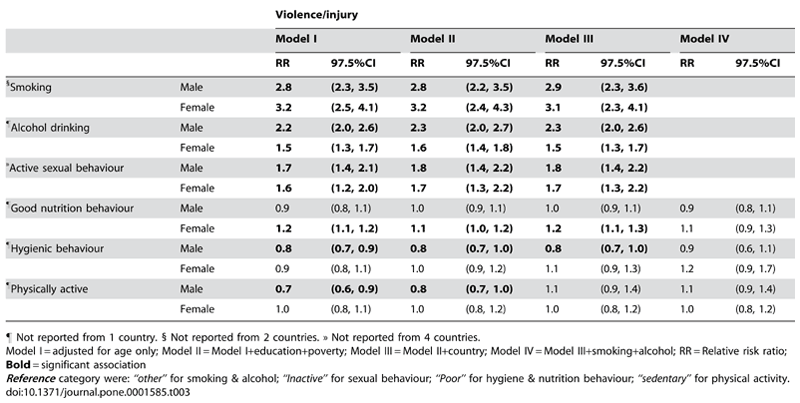
- A Japanese survey from February 2008 adds another dimension to the diet/lifestyle/behavior connection. “A cross-sectional, cross-national survey of 9 countries” determined that students who mistreated themselves via alcohol abuse, risky sexual activity and smoking were more likely of “being frequently bullied”. Conversely, eating well, practicing good hygiene and staying physically fit reduced the odds of being bullied and suffering from related injury and violence. (7)
I don’t believe that a healthy diet and lifestyle alone will convert this world into a utopia. Nor am I claiming that all prisoners will transform into law abiding, peaceful, pillars of society if they’d only have the right foods and supplements at their disposal. What I am proposing is that optimal nutrition and taking proper care of ourselves can change the way we feel and perceive the world. This can make an enormous difference in the decisions we make and paths we choose in life. The change that I’d like to see can happen on a case by case basis. It’ll require the assistance of community leaders, concerned individuals, parents, politicians and even prison guards. Start by setting an example for what you’d like to see in others. Be someone that your colleagues, family, friends and neighbors will want to emulate. Then take it one step further and spread the word. One day you may find that even the most unlikely of sources, such as big-wig politicians, may be ready to hear your message. If nothing else, the idea of saving money and their jobs could bring about a whole host of side benefits for us all.
Note: Please check out the “Comments & Updates” section of this blog – at the bottom of the page. You can find the latest research about this topic there!
Be well!
JP
Tags: Fish Oil, Minerals, Vitamins
Posted in Food and Drink, Mental Health, Nutrition
February 26th, 2010 at 3:43 am
Morning JP 🙂
great post, nice that you bring that on topic 🙂
it always makes me sad if i read about social deprived people especially children, they can’t protect itself against bad influences.
Years ago as a student i wrote a thesis about health, health lifestyles and health and social inequality. My research brought me this amazing article http://www.nice.org.uk/niceMedia/documents/childhood_disadvantage.pdf
Once read you will know health begins in the womb …..social inequality and health was “my” personal main topic during my study….;-)
Greetings
Nina K.
February 26th, 2010 at 11:31 am
Thank you for sharing that, Nina. 🙂
I will read the article you’ve linked to with great interest.
In my experience, many adults who “misbehave” are often just grown up children that have never been given the right resources – be it a healthy environment, food, positive examples/role models, etc. This isn’t an excuse or justification for antisocial or destructive acts. But it may give us a clue about how to help such individuals to change for the better, IMO. Also, prevention is key. Hopefully what we learn from missed opportunities can be used to prevent the same mistakes in the future.
Be well!
JP
February 26th, 2010 at 12:33 pm
A very interesting link that you point out between crime and nutrition! I am definitely in agreement that improved nutrition and lifestyle modifications can do wonders for those experiencing aggressive or antisocial behavior. How I wish that more people would take note of the power behind these simple changes!
Have a wonderful weekend!
February 26th, 2010 at 8:41 pm
My niece is assistant warden in a Florida prison and says that the violent criminals rarely eat their veggies.
In 2000, my late wife and I worked in an “orphanage” (residential juvenile detention center). All the kids wanted was fried food and KoolAid. When my wife and I tried to introduce milk, our supervisor, the school principal, yelled, “Where’s the KoolAid?”
February 26th, 2010 at 8:41 pm
Excellent article. The studies and the results only make sense. Any positive change I have experienced only enhanced my mood and brightened my outlook towards life. Continued positive change gives one the ability to handle those difficult times in life.
The only problem is implementing such a plan. Hopefully it would be easier than I imagine.
February 26th, 2010 at 9:32 pm
I’m sad to say that neither of those anecdotes surprise me, Iggy. It’s a shame.
Be well!
JP
February 26th, 2010 at 9:35 pm
Thank you, Mark. I’m happy to know of your personal victory and I couldn’t agree with you more re: lifestyle and outlook.
I understand your concerns about the difficulty of applying the information. But if we can find enough receptive minds, answers will be discovered. Even hard-headed people can be won over from time to time. We just need to share the compelling research we find, talk to others about what’s worked for us and lead by example. I think that’ll play a big part in inspiring the change we’re hoping to see.
Be well!
JP
February 27th, 2010 at 5:23 am
Morning JP 🙂
i agree, see that like you. Have you ever heard or read the book from Elain Gottschall about the SCDiet? (www.scdiet.com)? One chapter is about nutrition and brain, carbs and shizophrenia (all said 😉 ). I didn’t remember exactly but there are also some studies that showed that low carb helps people with shizophrenia and other brain disorders. I find it very logically that what we eat influences our brain. Too much sugar and sweets and empty starches shift my mood always in the angry way… 😉
Wish you and Mrs. Fellow a wonderful funny and relaxing weekend 🙂
Nina K.
February 27th, 2010 at 12:50 pm
Thank you, Bill! I have no doubt that your patients are already receiving this kind of guidance. 🙂 Now we just have to make sure more doctors, nutritionists and patients themselves are aware of this.
Be well!
JP
February 27th, 2010 at 12:55 pm
Nina,
I haven’t read that book but I will most certainly check out the link you provided. I was a big fan of Dr. Abram Hoffer who specialized in using diet and nutrients to assist those with schizophrenia. There’s definitely a connection there for many people who suffer from mental illness.
Speaking of which, I stumbled upon a fascinating article about the cons and pros of depression earlier today. If you’re interested, please check it out:
http://www.nytimes.com/2010/02/28/magazine/28depression-t.html?ref=health
I hope you and your husband find good/warmer weather and have a wonderful weekend as well! 🙂
Be well!
JP
February 16th, 2011 at 12:19 pm
Hi JP!
I am currently a Freshman in college getting ready to commence research on a study involving the effects of food on human behavior. I found your article to be highly interesting and I was wondering if you could suggest further reading to help me along my study? Also, if you could give me your name so that if I use your information in my paper, I could attribute the info as being yours, I would greatly appreciate it. Thanks a million
February 16th, 2011 at 1:47 pm
Thank you, Sam.
I wish you all the best with your studies. I suggest that you click on the footnoted links (at the end of some of the paragraphs above) and try to get in touch with the primary researchers of said studies. You may be able to acquire an interview or two and additional resources through them.
To answer you other question: my name is JP Fanton.
Be well!
JP
March 23rd, 2015 at 7:03 pm
Update: Lower omega-3 concentrations linked to more aggression and inattention in prisoners …
http://journals.plos.org/plosone/article?id=10.1371/journal.pone.0120220
PLoS One. 2015 Mar 20;10(3):e0120220.
Baseline Omega-3 Index Correlates with Aggressive and Attention Deficit Disorder Behaviours in Adult Prisoners.
BACKGROUND: There is emerging evidence that the supplementation of omega-3 contributes to a decrease in aggressive behaviour in prison populations. A challenge of such research is achieving statistical power against effect sizes which may be affected by the baseline omega-3 index. There are no published data on the blood omega-3 index with studies of this kind to assess the variability of the blood omega-3 index in conjunction with aggression and attention deficit assessments.
OBJECTIVE: To determine if the variance of the omega-3 index is correlated with aggressive and attention deficit behaviour in a prison population.
DESIGN: 136 adult male prisoners were recruited from South Coast Correctional Centre (SCCC), NSW Australia. A 7 point categorisation was used to quantify levels of aggressive behaviour (4 weeks) from individual SCCC case notes, whereby higher scores correspond to increasingly aggressive behaviour. Study participants completed the Aggression Questionnaire (AQ) and the Brown’s Attention Deficit Disorder Scales (BADDS), provided a blood sample for erythrocyte fatty acid analysis using gas chromatography and the omega-3 index was calculated.
RESULTS: The baseline omega-3 index ranged from 2.3% to 10.3%, indicating that some participants already had substantial omega-3 intake, however a median of 4.7% indicated a lower overall omega-3 intake than the general Australian population. Assessment of aggressive and attention deficit behaviour shows that there were negative correlations between baseline omega-3 index and baseline aggression categorisation scores (r = -0.21, P = 0.016); total AQ score (r = -0.234, P = 0.011); Anger (r = -0.222 p = 0.016); Hostility AQ (r = -0.239, P = 0.009); indirect aggression (r = -0.188 p = 0.042); total BADDS (r = -0.263, p = 0.005); Activation (r = -0.224, p = 0.016); Attention (r = -0.192, p = 0.043); Effort (r = -0.253, p = 0.007); Affect (r = -0.330, p = 0.000) and Memory (r = -0.240, p = 0.010).
CONCLUSIONS: There is a high variability in omega-3 status of a NSW prison population, and inmates with lower omega-3 index were more aggressive and had higher ADD scores.
Be well!
JP
October 11th, 2016 at 9:53 pm
Updated 10/11/16:
https://www.ncbi.nlm.nih.gov/pubmed/27723444
Perm J. 2016 Oct 7;20(4).
Reduced Trauma Symptoms and Perceived Stress in Male Prison Inmates through the Transcendental Meditation Program: A Randomized Controlled Trial.
CONTEXT: Trauma events are four times more prevalent in inmates than in the general public and are associated with increased recidivism and other mental and physical health issues.
OBJECTIVE: To evaluate the effects of Transcendental Meditationa (TM) on trauma symptoms in male inmates.
DESIGN: One hundred eighty-one inmates with a moderate- to high-risk criminal profile were randomly assigned to either the TM program or to a usual care control group.
MAIN OUTCOME MEASURES: The Trauma Symptom Checklist and the Perceived Stress Scale were administered at baseline and four-month posttest.
RESULTS: Significant reductions in total trauma symptoms, anxiety, depression, dissociation, and sleep disturbance subscales, and perceived stress in the TM group were found compared with controls (all p values < 0.001). The high-trauma subgroup analysis further showed a higher magnitude of effects in the TM group compared with controls on all outcomes, with Cohen effect sizes ranging from 0.67 to 0.89. CONCLUSION: Results are consistent with those of prior studies of the TM program in other populations and its effects on trauma symptoms and perceived stress. Be well! JP
March 24th, 2017 at 5:32 pm
Updated 03/24/17:
https://www.ncbi.nlm.nih.gov/pubmed/28333611
Perm J. 2017;21.
Transcendental Meditation and Reduced Trauma Symptoms in Female Inmates: A Randomized Controlled Study.
CONTEXT: Compared with the general population, trauma experiences are higher among incarcerated women.
OBJECTIVE: To evaluate the effects of Transcendental Meditation (TM) on trauma symptoms in female offenders.
DESIGN: Twenty-two inmates at the Coffee Creek Correctional Facility in Wilsonville, OR, with at least 4 months left of incarceration were enrolled in this randomized controlled pilot study. Subjects were randomly assigned to either the TM group (n = 11) or a wait-list control group (n = 11).
MAIN OUTCOME MEASURES: Subjects were measured at baseline and 4-month posttest using the Posttraumatic Stress Disorder Checklist-Civilian version (PCL-C; primary outcome) with intrusive thoughts, avoidance, and hyperarousal subscales (secondary outcomes). Twenty of the subjects (10 in each group) took part in their treatment assignment and completed posttesting.
RESULTS: Significant reductions were found on total trauma (p < 0.036), intrusive thoughts (p < 0.026), and hyperarousal (p < 0.043) on the PCL-C. Effect sizes ranged from 0.65 to 0.99 for all variables. Eighty-one percent of the TM subjects were compliant with their program. CONCLUSION: The results of this study indicate feasibility of the TM program in a female prison population and suggest that TM may be an effective tool for decreasing trauma symptoms. Future large-scale research is warranted. Be well! JP
November 2nd, 2017 at 8:11 pm
Updated 11/02/17:
https://www.frontiersin.org/articles/10.3389/fpsyt.2017.00204/full
Front Psychiatry. 2017 Oct 16;8:204.
Yoga in Correctional Settings: A Randomized Controlled Study.
BACKGROUND: The effect of yoga in the reduction of depressive symptoms, anxiety, stress, anger as well as in the increased ability of behavioral control has been shown. These effects of yoga are highly relevant for prison inmates who often have poor mental health and low impulse control. While it has been shown that yoga and meditation can be effective in improving subjective well-being, mental health, and executive functioning within prison populations, only a limited number of studies have proved this, using randomized controlled settings.
METHODS: A total of 152 participants from nine Swedish correctional facilities were randomly assigned to a 10-week yoga group (one class a week; N = 77) or a control group (N = 75). Before and after the intervention period, participants answered questionnaires measuring stress, aggression, affective states, sleep quality, and psychological well-being and completed a computerized test measuring attention and impulsivity.
RESULTS: After the intervention period, significant improvements were found on 13 of the 16 variables within the yoga group (e.g., less perceived stress, better sleep quality, an increased psychological and emotional well-being, less aggressive, and antisocial behavior) and on two within the control group. Compared to the control group, yoga class participants reported significantly improved emotional well-being and less antisocial behavior after 10 weeks of yoga. They also showed improved performance on the computerized test that measures attention and impulse control.
CONCLUSION: It can be concluded that the yoga practiced in Swedish correctional facilities has positive effects on inmates’ well-being and on considerable risk factors associated with recidivism, such as impulsivity and antisocial behavior. Accordingly, the results show that yoga practice can play an important part in the rehabilitation of prison inmates.
Be well!
JP
September 21st, 2018 at 12:00 pm
Updated 09/21/18:
https://www.frontiersin.org/articles/10.3389/fpsyt.2018.00407/full
Front Psychiatry. 2018 Sep 3;9:407.
Yoga Practice Reduces the Psychological Distress Levels of Prison Inmates.
Background: Psychiatric ill-health is prevalent among prison inmates and often hampers their rehabilitation. Rehabilitation is crucial for reducing recidivistic offending. A few studies have presented evidence of the positive effect of yoga on the well-being of prison inmates. The conclusion of those previous studies that yoga is an effective method in the rehabilitation process of inmates, and deserves and requires further attention. Aims: The current study aimed to evaluate the effect of 10 weeks of yoga practice on the mental health profile, operationalized in the form of psychological distress, of inmates. Methods: One hundred and fifty-two volunteer participants (133 men; 19 women) were randomly placed in either of two groups: to participate in weekly 90-min yoga class (yoga group) or a weekly 90-min free-choice physical exercise (control group). The study period lasted for 10 weeks. Prior to and at the end of the study period the participants completed a battery of self-reported inventories, including the Brief Symptom Inventory (BSI). Results: Physical activity (including yoga) significantly reduced the inmates’ levels of psychological distress. Yoga practice improved all primary symptom dimensions and its positive effect on the obsessive-compulsive, paranoid ideation, and somatization symptom dimensions of the BSI stayed significant even when comparing with the control group. Conclusions: Yoga as a form of physical activity is effective for reducing psychological distress levels in prison inmates, with specific effect on symptoms such as suspicious and fearful thoughts about losing autonomy, memory problems, difficulty in making decisions, trouble concentrating, obsessive thought, and perception of bodily dysfunction.
Be well!
JP