

Blood Clots and Diet
November 29, 2010 Written by JP [Font too small?]I’ll be away on a business trip for the next couple weeks. I have some consulting work and research to conduct in Europe. While away, I plan to continue to post new content. However, you’ll notice a difference in the length of my road trip material. Some of my upcoming columns will be abbreviated because of my hectic itinerary and time constraints. But, when I return home, I hope to have some interesting anecdotes and information to share with you about my time abroad.

Venous thromboembolism or VTE is a disease that is characterized by potentially life threatening blood clots. According to the world renowned Cleveland Clinic, VTE is “the third most common cardiovascular illness after acute coronary syndrome and stroke”. Fortunately, new research from the Department of Medicine in Thailand suggests that modifying one’s diet can dramatically reduce the risk of suffering from venous thromboembolism. An examination of the eating habits of middle-aged Thai men and women revealed that those who consumed significantly less fish, spicy food and vegetables were almost four times more likely to experience a VTE. Being obese, overweight and using estrogen replacement therapy also increased the risk of VTE substantially. The conclusion of the research states that “Low vegetable intake, hormonal use and high BMI (body mass index) are risk factors for noncancer-related VTE”. (1,2)
Age-Related, Cumulative Risks of Heart Disease, Stroke & Venous Thromboembolism
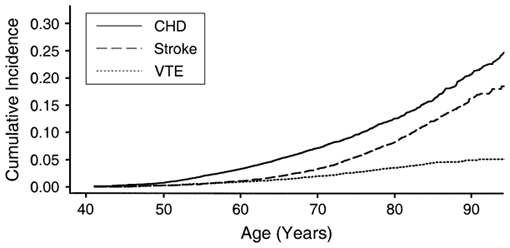
Source: Am. J. Epidemiol. (15 November 2005) 162 (10): 975-982. (link)
A recent review in the journal Theoretical Biology and Medical Modeling suggests that vegetable-rich diets including Mediterranean, vegan and vegetarian menu plans may be best suited for intervention trials that aim to reduce the occurrence of VTE. Surprisingly, the summary specifically discourages the use of “step 1” and “step 2” diets that are recommended by the American Heart Association (AHA). The authors note that “There is no evidence that the AHA step 1 or step 2 diets would reduce VTE risk any more than overall cardiovascular risk, so they would not be good low VTE risk diet candidates”. Based on the evidence presented in the previously mentioned publications, it would appear that a diet rich in omega-3 fatty acids (found in fish and fish oil) and (non-starchy) vegetables would be wise selections for anyone concerned about venous thromboembolism. While you’re at it, adding a little extra spice to your seafood and veggies may also tip the odds in your favor. (3)
Note: Please check out the “Comments & Updates” section of this blog – at the bottom of the page. You can find the latest research about this topic there!
Be well!
JP
Tags: Circulation, Stroke, Vegetables
Posted in Heart Health, Nutrition, Women's Health
November 30th, 2010 at 2:15 pm
I hope you have a great trip… We look forward to the stories and lessons that you will bring back!
November 30th, 2010 at 3:07 pm
Thank you, Steve! 🙂
Be well!
JP
December 1st, 2010 at 10:51 am
If your going to England make sure you pack your winter woolies, its snowing!
December 2nd, 2010 at 5:00 pm
Liverock,
Right now, we’re in France. It’s quite cold – a low in the 20’s! Snow is on the ground! Still, it’s beautiful and we’re grateful to be here!
Be well!
JP
May 3rd, 2015 at 6:06 pm
Update 05/03/15:
http://www.ajconline.org/article/S0002-9149%2815%2900688-8/abstract
Am J Cardiol. 2015 May 1;115(9):1204-11.
Relation of fish oil supplementation to markers of atherothrombotic risk in patients with cardiovascular disease not receiving lipid-lowering therapy.
Fish oil supplementation (FOS) is known to have cardiovascular benefits. However, the effects of FOS on thrombosis are incompletely understood. We sought to determine if the use of FOS is associated with lower indices of atherothrombotic risk in patients with suspected coronary artery disease (sCAD). This is a subgroup analysis of consecutive patients with sCAD (n = 600) enrolled in the Multi-Analyte, Thrombogenic, and Genetic Markers of Atherosclerosis study. Patients on FOS were compared with patients not on FOS. Lipid profile was determined by vertical density gradient ultracentrifugation (n = 520), eicosapentaenoic acid + docosahexaenoic acid was measured by gas chromatography (n = 437), and AtherOx testing was performed by immunoassay (n = 343). Thromboelastography (n = 419), ADP- and collagen-induced platelet aggregation (n = 137), and urinary 11-dehydrothromboxane B2 levels (n = 259) were performed immediately before elective coronary angiography. In the total population, FOS was associated with higher eicosapentaenoic acid + docosahexaenoic acid content (p <0.001), lower triglycerides (p = 0.04), total very low-density lipoprotein cholesterol (p = 0.002), intermediate-density lipoprotein cholesterol (p = 0.02), and AtherOx levels (p = 0.02) but not in patients on lipid-lowering therapy. Patients not on lipid-lowering therapy taking FOS had lower very low-density lipoprotein cholesterol, intermediate-density lipoprotein cholesterol, remnant lipoproteins, triglycerides, low-density lipoprotein cholesterol, AtherOx levels, collagen-induced platelet aggregation, thrombin-induced platelet-fibrin clot strength, and shear elasticity (p <0.03 for all). In clopidogrel-treated patients, there was no difference in ADP-induced aggregation between FOS groups. Patients on FOS had lower urinary 11-dehydrothromboxane B2 levels regardless of lipid-lowering therapy (p <0.04). In conclusion, the findings of this study support the potential benefit of FOS for atherothrombotic risk reduction in sCAD with the greatest benefit in patients not receiving lipid-lowering therapy. Future prospective studies to compare FOS with lipid-lowering therapy and to assess the independent effects of FOS on thrombogenicity are needed.
Be well!
JP
May 3rd, 2015 at 6:11 pm
Update 05/03/15:
http://www.sciencedirect.com/science/article/pii/S0531556514003799
Exp Gerontol. 2015 Feb;62:14-22.
Yerba mate (Ilex paraguariensis) improves microcirculation of volunteers with high blood viscosity: a randomized, double-blind, placebo-controlled trial.
BACKGROUND: Elevated blood viscosity is a risk factor for atherosclerosis, thrombosis and other cardiovascular events. Our previous studies have suggested that consumption of Yerba mate tea (Ilex paraguariensis) has strong antioxidant and lipid-lowering properties in animals. The in vivo effects of Yerba mate on blood viscosity in humans, however, have not been studied.
OBJECTIVE: This study aims to investigate the effect of Yerba mate tea on the reduction of blood viscosity and the improvement of microcirculatory parameters commonly regarded as risk factors for serious cardio and cerebrovascular disorders.
METHODS: 142 subjects with high blood viscosity were recruited in this randomized, double-blind, placebo-controlled study. Yerba mate tea or placebo (5 g/day) was administered to different groups for 6 weeks. After treatment, results of hemorheological indexes, nailfold microcirculation, 6-keto-PGF1α and TXB2 and lipid profiles of subjects in the Yerba mate tea group were compared with those in the placebo-receiving group.
RESULTS: Parameters of blood viscosity and microcirculation were improved in the subjects from the Yerba mate tea group but not in placebo-receiving patients. After treatment, whole blood viscosity, plasma viscosity and the Equation K value of erythrocyte sedimentation rate (ESRK) decreased significantly in the Yerba mate group. Meanwhile, shape, flow state and nailfold microcirculation appeared positively changed. Specifically, blood flow speeds accelerated gradually and nailfold weighted integral values decreased significantly. Moreover, the vasodilator 6-keto PGF1α increased while the thromboxane TXB2 decreased in serum samples of subjects in the Yerba mate-receiving group. Overall, Yerba mate tea-receiving subjects saw nearly all measured values improve to levels comparable to those characteristic of patients with normal microcirculation.
CONCLUSIONS: These results indicate the therapeutic capacity of Yerba mate tea in the treatment of high blood viscosity. Here, Yerba mate tea played a role in the regulation of various indexes of hemorheology, nailfold microcirculation, and the platelet aggregating factors 6-keto-PGF1a and TXB2. The regulation of these might be correlated with reduced blood viscosity and accelerating blood flow. Thus, Yerba mate tea may reduce some key risk-factors of cardiovascular disease. Daily consumption of Yerba mate tea may be a better-tolerated option for individuals with high blood viscosity and microcirculatory disturbance and as such, a novel preventative strategy for patients at-risk for vascular disease.
Be well!
JP
August 3rd, 2015 at 2:16 pm
Updated 08/03/15:
http://th.schattauer.de/en/contents/archive/issue/special/manuscript/24635.html
Thromb Haemost. 2015 Jul 23;114(5).
Reduced peak, but no diurnal variation, in thrombin generation upon melatonin supplementation in tetraplegia. A randomised, placebo-controlled study.
Tetraplegic patients have increased risk of venous thrombosis despite anti-thrombotic prophylaxis. Moreover, they have blunted plasma variations in melatonin and altered diurnal variation of several haemostatic markers, compared with able-bodied. However, whether healthy individuals and tetraplegic patients, with or without melatonin, display abnormalities in thrombin generation during a 24-hour (h) cycle, is unknown. We therefore used the Calibrated Automated Thrombogram (CAT) assay to examine diurnal variations and the possible role of melatonin in thrombin generation. Six men with long-standing complete tetraplegia were included in a randomised placebo-controlled cross-over study with melatonin supplementation (2 mg, 4 consecutive nights), whereas six healthy, able-bodied men served as controls. Ten plasma samples were collected frequently during a 24-h awake/sleep cycle. No significant diurnal variation of any of the measured CAT indices was detected in the three study groups. Whereas endogenous thrombin potential (ETP) was independent (p > 0.05) of whether the tetraplegic men received melatonin or placebo, melatonin decreased (p = 0.005). Peak values in tetraplegia compared with those given placebo. Able-bodied men had lower (p = 0.019) ETP and Lag-Time (p = 0.018) compared with tetraplegics receiving placebo. Neither the Time-to-Peak nor the Start-Tail was affected (p > 0.05) by melatonin in tetraplegia. In conclusion, indices of thrombin generation are not subjected to diurnal variation in healthy able-bodied or tetraplegia, but peak thrombin generation is reduced in tetraplegic men receiving oral melatonin.
Be well!
JP
August 3rd, 2015 at 2:20 pm
Updated 08/03/15:
http://www.minervamedica.it/en/journals/panminerva-medica/article.php?cod=R41Y2015N03A0121
Panminerva Med. 2015 Sep;57(3):121-5.
Recurrence of retinal vein thrombosis with Pycnogenol® or Aspirin® supplementation: a registry study.
AIM: The aim of this study was to use Pycnogenol® to reduce the recurrence of retinal vein thrombosis (RVT) after a first episode. Pycnogenol® is an anti-inflammatory, anti-edema and an antiplatelet agent with a “mild” antithrombotic activity. The registry, using Pycnogenol® was aimed at reducing the number of repeated episodes of RVT.
METHODS: Possible management options–chosen by patients–were: standard management; standard management + oral Aspirin® 100 mg once/day (if there were no tolerability problems before admission); standard management + Pycnogenol® two 50 mg capsules per day (for a total of 100 mg/day). Number of subjects, age, sex, distribution, percentage of smokers, and vision were comparable.
RESULTS: Recurrent RVT was seen in 17.39% of controls and in 3.56% of subjects supplemented with Pycnogenol® (P<0.05 vs. controls). There was RVT in 15.38% of the subjects using Aspirin®. The incidence of RVT was 4.88 times higher with standard management in comparison with the supplement group and 4.32 lower with Pycnogenol® supplementation in comparison with Aspirin®. Vision level was better with Pycnogenol® (20/25 at nine months; P<0.05). With Pycnogenol®, edema at the retinal level was also significantly reduced compared to the other groups. Pycnogenol® has a very good safety profile. In the Aspirin® group 26 completed 9 months and 6 subjects dropped out for tolerability problems. In the Aspirin® group, 2 minor, subclinical, retinal, hemorrhagic episodes during the follow-up were observed (2 subjects out of 26, equivalent to 7.69%). This pilot registry indicates that Pycnogenol® seems to reduce the recurrence of RVT without side effects. It does not induce new hemorrhagic episodes that may be theoretically linked to the use of Aspirin® (or other antiplatelets).
CONCLUSION: Larger studies should be planned involving a wider range of conditions, diseases and risk factors associated to RVT and to its recurrence.
Be well!
JP
August 3rd, 2015 at 2:23 pm
Updated 08/03/15:
http://link.springer.com/article/10.1007%2Fs10151-015-1302-9
Tech Coloproctol. 2015 Jun;19(6):339-45.
Flavonoids mixture (diosmin, troxerutin, hesperidin) in the treatment of acute hemorrhoidal disease: a prospective, randomized, triple-blind, controlled trial.
BACKGROUND: The role of a mixture of phlebotonics in the treatment of acute hemorrhoid crisis is investigated to test their efficacy.
METHODS: One hundred and thirty-four consecutive patients with an acute hemorrhoidal crisis recruited in five colorectal units entered the study. Sixty-six of them were randomized to receive a mixture of diosmin, troxerutin and hesperidin (group A), and 68 a placebo (group B). The main symptoms, the use of oral painkillers and the Bristol scale score were recorded at each scheduled visit and compared using both Student’s t test for independent samples and the ANOVA models for repeated measures. The presence of edema, prolapse and thrombosis were also recorded and compared using the Chi-square test. Furthermore, the trend of proportions during the time of the evaluations was assessed by the Chi-square test for linear trend.
RESULTS: Pain, bleeding and the proportion of patients who reported persistence of edema and thrombosis decreased significantly after 12 days of treatment in group A. After 6 days, the number of paracetamol tablets taken by patients in group A was significantly lower than the amount of flavonoid mixture.
CONCLUSIONS: The use of a mixture of diosmin, troxerutin and hesperidin is a safe and effective mean of managing symptoms of acute hemorrhoidal disease. Furthermore, in patients receiving treatment, there was faster control and lower persistence of edema and thrombosis.
Be well!
JP
September 8th, 2015 at 2:32 pm
Updated 09/08/15:
http://www.minervamedica.it/en/journals/panminerva-medica/article.php?cod=R41Y2015N03A0121
Panminerva Med. 2015 Sep;57(3):121-5.
Recurrence of retinal vein thrombosis with Pycnogenol® or Aspirin® supplementation: a registry study.
AIM: The aim of this study was to use Pycnogenol® to reduce the recurrence of retinal vein thrombosis (RVT) after a first episode. Pycnogenol® is an anti-inflammatory, anti-edema and an antiplatelet agent with a “mild” antithrombotic activity. The registry, using Pycnogenol® was aimed at reducing the number of repeated episodes of RVT.
METHODS: Possible management options–chosen by patients–were: standard management; standard management + oral Aspirin® 100 mg once/day (if there were no tolerability problems before admission); standard management + Pycnogenol® two 50 mg capsules per day (for a total of 100 mg/day). Number of subjects, age, sex, distribution, percentage of smokers, and vision were comparable.
RESULTS: Recurrent RVT was seen in 17.39% of controls and in 3.56% of subjects supplemented with Pycnogenol® (P<0.05 vs. controls). There was RVT in 15.38% of the subjects using Aspirin®. The incidence of RVT was 4.88 times higher with standard management in comparison with the supplement group and 4.32 lower with Pycnogenol® supplementation in comparison with Aspirin®. Vision level was better with Pycnogenol® (20/25 at nine months; P<0.05). With Pycnogenol®, edema at the retinal level was also significantly reduced compared to the other groups. Pycnogenol® has a very good safety profile. In the Aspirin® group 26 completed 9 months and 6 subjects dropped out for tolerability problems. In the Aspirin® group, 2 minor, subclinical, retinal, hemorrhagic episodes during the follow-up were observed (2 subjects out of 26, equivalent to 7.69%). This pilot registry indicates that Pycnogenol® seems to reduce the recurrence of RVT without side effects. It does not induce new hemorrhagic episodes that may be theoretically linked to the use of Aspirin® (or other antiplatelets).
CONCLUSION: Larger studies should be planned involving a wider range of conditions, diseases and risk factors associated to RVT and to its recurrence.
Be well!
JP
September 1st, 2016 at 6:34 pm
Updated 09/01/16:
http://link.springer.com/article/10.1007%2Fs00394-016-1265-2
Eur J Nutr. 2016 Jul 7.
Fruitflow®: the first European Food Safety Authority-approved natural cardio-protective functional ingredient.
Hyperactive platelets, in addition to their roles in thrombosis, are also important mediators of atherogenesis. Antiplatelet drugs are not suitable for use where risk of a cardiovascular event is relatively low. It is therefore important to find alternative safe antiplatelet inhibitors for the vulnerable population who has hyperactive platelets in order to reduce the risk of cardiovascular disease. Potent antiplatelet factors were identified in water-soluble tomato extract (Fruitflow®), which significantly inhibited platelet aggregation. Human volunteer studies demonstrated the potency and bioavailability of active compounds in Fruitflow®. Fruitflow® became the first product in Europe to obtain an approved, proprietary health claim under Article 13(5) of the European Health Claims Regulation 1924/2006 on nutrition and health claims made on foods. Fruitflow® is now commercially available in different countries worldwide. In addition to its reduction in platelet reactivity, Fruitflow® contains anti-angiotensin-converting enzyme and anti-inflammatory factors, making it an effective and natural cardio-protective functional food.
Be well!
JP
September 6th, 2017 at 11:12 am
Updated 09/06/17:
https://www.ncbi.nlm.nih.gov/pubmed/28870486
Nutrition. 2017 Oct;42:92-98.
Effect of 1-y oral supplementation with vitaminized olive oil on platelets from healthy postmenopausal women.
OBJECTIVE: Olive oil is the main fat source in the Mediterranean diet and shows a protective role against aging and related diseases. Osteoporosis represents a serious health problem worldwide and is associated with an increased risk for fractures and mortality. Nutrition should be part of bone disease prevention strategies, especially in light of the aging population and the effect of diet on bone health. The aim of this study was to investigate whether oral supplementation with extra virgin olive oil (VOO) enriched with vitamins D3, K1, and B6 (VitVOO) is able to modify some physicochemical and functional plasma membrane properties and nitrosative stress markers status.
METHODS: In this single-center, randomized placebo-controlled trial, 60 postmenopausal women were administered either VitVOO or placebo (PlaVOO). After 1 y of oral supplementation, platelet membrane fluidity changes, Na+/K+-ATPase activity, serum nitric oxide, and peroxynitrite levels were determined in participants.
RESULTS: After 1 y (time 1), women taking VitVOO showed lower nitric oxide levels than those taking PlaVOO; the same trend was found for peroxynitrite levels. As far as membrane fluidity was concerned, a significant decrease in anisotropy of diphenylhexatriene and trimethylammonium-diphenylhexatriene at time 1 in VitVOO participants compared with PlaVOO was found. Finally, Na+/K+-ATPase activity showed a significant increase after VitVOO supplementation.
CONCLUSION: The supplementation of VitVOO into the diet of postmenopausal women could represent a proper tool for platelet function and a useful strategy against nitrosative stress and related diseases, thus confirming the antioxidant role played by the added vitamins.
Be well!
JP
January 24th, 2018 at 12:31 pm
Updated 1/24/18:
http://www.mdpi.com/2072-6643/9/4/321/htm
Nutrients 2017, 9(4), 321
The Effect of Regular Intake of Dry-Cured Ham Rich in Bioactive Peptides on Inflammation, Platelet and Monocyte Activation Markers in Humans
Background and aims: Dietary studies have shown that active biopeptides provide protective health benefits, although the mediating pathways are somewhat uncertain. To throw light on this situation, we studied the effects of consuming Spanish dry-cured ham on platelet function, monocyte activation markers and the inflammatory status of healthy humans with pre-hypertension.
Methods: Thirty-eight healthy volunteers with systolic blood pressure of >125 mmHg were enrolled in a two-arm crossover randomized controlled trial. Participants received 80 g/day dry-cured pork ham of >11 months proteolysis or 100 g/day cooked ham (control product) for 4 weeks followed by a 2-week washout before “crossing over” to the other treatment for 4 more weeks. Soluble markers and cytokines were analyzed by ELISA. Platelet function was assessed by measuring P-selectin expression and PAC-1 binding after ADP (adenosine diphosphate) stimulation using whole blood flow cytometry. Monocyte markers of the pathological status (adhesion, inflammatory and scavenging receptors) were also measured by flow cytometry in the three monocyte subsets after the interventional period.
Results: The mean differences between dry-cured ham and cooked ham followed by a time period adjustment for plasmatic P-selectin and interleukin 6 proteins slightly failed (p = 0.062 and p = 0.049, respectively), notably increased for MCP-1 levels (p = 0.023) while VCAM-1 was not affected. Platelet function also decreased after ADP stimulation. The expression of adhesion and scavenging markers (ICAM1R, CXCR4 and TLR4) in the three subsets of monocytes was significantly higher (all p < 0.05). Conclusions: The regular consumption of biopeptides contained in the dry-cured ham but absent in cooked ham impaired platelet and monocyte activation and the levels of plasmatic P-selectin, MCP-1 and interleukin 6 in healthy subjects. This study strongly suggests the existence of a mechanism that links dietary biopeptides and beneficial health effects. Be well! JP
January 19th, 2019 at 4:43 pm
Updated 01/19/19:
https://www.ncbi.nlm.nih.gov/pubmed/30656277
Res Pract Thromb Haemost. 2018 Dec 13;3(1):59-69.
Dietary intake of marine n-3 polyunsaturated fatty acids and future risk of venous thromboembolism.
Background: Studies on the association between long-chained n-3 polyunsaturated fatty acids (n-3 PUFAs) and risk of venous thromboembolism (VTE) are conflicting, potentially due to challenges related to assessment of n-3 PUFA intake and changes in diet during follow-up.
Objectives: To investigate whether dietary intake of marine n-3 PUFAs was associated with risk of incident VTE in a population-based cohort with repeated assessments of n-3 PUFA intake.
Methods: We recruited 21 970 participants (after excluding 7570 with incomplete data) from the fourth (1994-1995) and sixth (2007-2008) surveys of the Tromsø Study, and recorded incident VTEs up to 2016. Intake of n-3 PUFAs was computed from self-reported consumption of fat and lean fish, fish spread, and supplements. Cox proportional hazards regression models with n-3 PUFA intake as a time-varying variable were used to calculate hazard ratios (HRs) with 95% confidence intervals (CIs) for VTE across quartiles (Q) of n-3 PUFA intake.
Results: There were 541 incident VTEs during follow-up. Compared to Q1, subjects in Q2-4 had 22%-26% lower risk of VTE (HR Q2 0.74, 95% CI 0.57-0.96; HR Q3 0.77, 95% CI 0.59-0.99; HR Q4 0.78, 95% CI 0.61-1.00). The association was most pronounced for provoked VTE, particularly provoked pulmonary embolism (PE), with risk estimates of 0.42 (95% CI 0.25-0.72), 0.40 (95% CI 0.23-0.68), and 0.61 (95% CI 0.38-0.96) for Q2-4, respectively.
Conclusions: Dietary intake of marine n-3 PUFAs was associated with a lower risk of VTE, particularly provoked PE. The association displayed a threshold pattern and suggested a protective effect of an n-3 PUFA intake ≥4.7 g/week.
Be well!
JP