

Lemon Balm Tea
July 27, 2011 Written by JP [Font too small?]We’re all familiar with medical first aid kits. But, have you ever considered putting together a mental health first aid kit? It might contain a reminder to breathe deeply, a small bottle of lavender essential oil and, perhaps, even an inspirational quotation or two. Herbal teas could also be included. A few that immediately come to mind are chamomile, kava and passion flower teas. Lemon balm (Melissa officinalis), a citrus scented member of the mint family, is rarely included in the top tier of calming natural remedies. This is a shame because modern science and traditional use indicate that it can be a valuable resource for a variety of mental woes.
There’s more to the promotion of mental health than just re-establishing a calm state of mind. Surely this is helpful, but not all inclusive. Sometimes we require longer term assistance during periods of prolonged stress. In other instances, it’s our memory that suffers due to preoccupations and other forms of psychological torment. Fortunately, lemon balm may be of assistance in all three of the states of mind I’ve mentioned above.
Acute anxiety is one of the more common psychological challenges faced by mankind. This, in part, explains why alcohol and marijuana are frequently the “drugs” of choice for those in need of immediate, sporadic relief. These natural agents effectively and quickly dull the senses. Lemon balm extract provides a significantly different and potentially safer option. Several, peer-reviewed studies published between 2002 – 2004 reveal that moderate dosages of M. officinalis improved “self-ratings of calmness” and also certain measures of cognitive performance. However, it should be noted that the trials employed differing dosages and reported some variations with regard to post ingestion alertness. Until this matter is more clearly elucidated, I would suggest monitoring the effect of lemon balm in a safe setting prior to using it in a public platform – driving or while at school or work. (1,2,3)
M. officinalis has been evaluated as a therapeutic agent for chronic mental health concerns as well. Animal and in vitro studies have found that lemon balm extracts modulate stressful reactions by increasing the level of the inhibitory neurotransmitter GABA and reducing the stress hormone corticosterone in the brain. In addition, lemon balm appears to stimulate the growth of new brain cells (neurogenesis) in a region of the brain, the hippocampus, that is adversely affected by depression and stress. What’s more, various trials have established that combining lemon balm with other herbal extracts including hops and valerian root effectively and safely addresses psychological symptoms ranging from depression to insomnia in adults and children alike. (4,5,6,7,8,9)
Anxiety and stress typically affect memory in an adverse manner. A recent review in the Journal of Neurosciences in Rural Practice presents data supporting the use of lemon balm for even the most severe forms of memory impairment such as mild to moderate Alzheimer’s disease (AD). The basis for the Alzheimer’s claim has to do with studies that have examined the promise of aromatherapeutic and oral administration of lemon balm in patients with AD. According to the lead authors of the summary, M. officinalis also “amends mood and cognitive ability during acute administration in healthy young volunteers and has no side effects or symptoms of toxicity”. (10,11,12)
Lemon Balm May Support New Brain Cell Growth in the Hippocampus
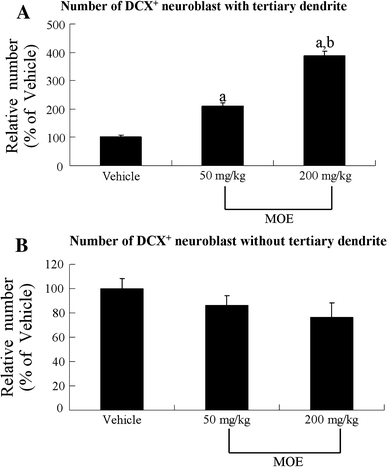
Source: Neurochem Res. 2011 Feb;36(2):250-7. (link)
We all know that there are numerous medications that can help tame anxiety and promote a more even keel. However, finding a drug candidate that is relatively side-effect free is a tall order. As is often the case, natural alternatives not only provide a better safety profile, but they also tend to afford select “side benefits”. Lemon balm is no exception to this rule. It’s long been known that M. officinalis is a potent reservoir of otherwise elusive antioxidants – caffeic, ferulic and rosmarinic acids. A study dating back to February 2005 presented in the British Journal of Nutrition determined that simply adding lemon balm to a salad increased the antioxidant content of a meal by 150% to 200%. But, the most impressive evidence supporting the antioxidant potential of lemon balm was just recently revealed in the journal Toxicology and Industrial Health. In the publication, a group of 55 employees working at a radiology center who were regularly exposed to low-dose radiation were asked to drink lemon balm tea twice daily. Before and after blood work concluded that the herbal tea lead to a “marked reduction in plasma DNA damage, myeloperoxidase, and lipid peroxidation” and a “significant improvement in plasma levels of catalase, superoxide dismutase, and glutathione peroxidase”. In effect, the lemon balm supplementation shielded the workers from the damage caused by work related radiation exposure. If it can protect such high risk workers, imagine what it could do for the rest of us. (13,14,15)
If you decide to experiment with lemon balm, you might want to consider starting off with lemon balm tea. There are few reasons for this recommendation. I briefly touched upon the first reason in the prior paragraph pertaining to memory. The aromatherapeutic scent of M. officinalis may, in and of itself, support a more peaceful state of mind. Also, new evidence reports that steeping lemon balm for 15 minutes or more dramatically increases the extraction of important antioxidants or polyphenols. Simply popping a capsule or tablet may not confer the same attributes. Once the tea is brewed, you can enjoy it cold or hot, natural or sweetened. (16)
Note: Please check out the “Comments & Updates” section of this blog – at the bottom of the page. You can find the latest research about this topic there!
Be well!
JP
Tags: Anxiety, Memory, Tea
Posted in Food and Drink, Mental Health, Nutritional Supplements
February 15th, 2015 at 6:35 pm
Update: Lemon balm extract may also protect against heart palpitations …
http://www.sciencedirect.com/science/article/pii/S0378874115000781
J Ethnopharmacol. 2015 Feb 10. pii: S0378-8741(15)00078-1.
Heart palpitation relief with Melissa officinalis leaf extract: Double blind, randomized, placebo controlled trial of efficacy and safety.
ETHNOPHARMACOLOGICAL RELEVANCE:
In Traditional Iranian Medicine (TIM), Melissa officinalis L. is commonly regarded as an effective therapy for heart palpitations.
OBJECTIVE:
Heart palpitation is a common complaint that is often benign and associated with a marked distress that makes the condition difficult to treat. Herbal medicines provide an alternative to conventional drugs for treating various kinds of diseases. This study was done as a double blind randomized placebo-controlled clinical trial to evaluate the efficacy and safety of the dried extract of M. officinalis on adults suffering from benign palpitations.
MATERIALS AND METHODS:
Eligible volunteers were randomly assigned as outpatients to a fourteen day treatment with 500mg twice a day of lyophilized aqueous extract of M. officinalis leaves (or placebo). Participants in the tests, physicians and researchers were blind to group assignments. Both primary and secondary outcomes were patient-reported. Primary outcomes were obtained from two measures: mean frequency of palpitation episodes per week, derived from patients’ diaries, and mean intensity of palpitation estimated through Visual Analogue Scale (VAS) in a self-report questionnaire. Psychiatric symptoms (somatization, anxiety and insomnia, social dysfunction and severe depression) were evaluated as secondary outcomes by General Health Questionnaire-28(GHQ-28), before and after intervention.
RESULTS:
Fifty-five volunteers out of seventy-one recruited study subjects completed the trial. Results showed that 14-days of treatment with lyophilized aqueous extract of M. officinalis leaves reduced frequency of palpitation episodes and significantly reduced the number of anxious patients in comparison to the placebo (P=0.0001, P=0.004resp.). Also, M. officinalis extract showed no indication of any serious side effects.
CONCLUSION:
Lyophilized aqueous extract of Melissa officinalis leaves may be a proper and safe herbal drug for the treatment of benign palpitations.
Be well!
JP
April 4th, 2017 at 11:51 pm
Updated 04/04/17:
https://www.ncbi.nlm.nih.gov/pubmed/28367927
J Nutr Sci Vitaminol (Tokyo). 2017;63(1):59-68.
Beneficial Effects of Lemon Balm Leaf Extract on In Vitro Glycation of Proteins, Arterial Stiffness, and Skin Elasticity in Healthy Adults.
Glycation, a non-enzymatic glycosylation of proteins, induces tissue damage in association with various diseases and aging phenomena. Pentosidine, an advanced glycation end product, is involved in aging phenomena such as tissue stiffness. In this study, we aimed to find a potent anti-glycation food material and to verify its health benefits by clinical trial. From among 681 hot water plant extracts, lemon balm (Melissa officinalis; LB) leaf extract was selected and revealed to have more potent inhibitory activity for pentosidine formation than a representative anti-glycation agent, aminoguanidine. Rosmarinic acid (RA), a typical polyphenol in Lamiaceae plants, was identified as a major active component in LB extract (LBE). Furthermore, LBE or RA dose-dependently suppressed glycation-associated reactions such as increased fluorescence, yellowing of collagen fiber sheets, and degeneration of the fibrous structure of elastin fiber sheets. An open-label, parallel-group comparative trial was conducted in 28 healthy Japanese subjects aged 31-65 y who consumed LB tea (LB group) or barley tea (Control group) for 6 wk. The LB group showed significant reductions in brachial-ankle pulse wave velocity, reflecting arterial stiffness, and b* (yellow) color values in forearm skin compared with the Control group. A gender-stratified analysis revealed that cheek skin elasticity was significantly improved in the LB group compared with the Control group only in female subjects. It is concluded that the hot water extract of LB leaf has the potential to provide health benefits with regard to glycation-associated tissue damage in blood vessels and skin of healthy adults.
Be well!
JP
May 26th, 2018 at 7:52 pm
Updated 05/26/18:
https://www.liebertpub.com/doi/10.1089/acm.2017.0153
J Altern Complement Med. 2018 May 9.
Efficacy of a Combination of Melissa officinalis L. and Nepeta Menthoides Boiss. & Buhse on Insomnia: A Triple-Blind, Randomized Placebo-Controlled Clinical Trial.
BACKGROUND: Insomnia is a prevalent sleep disorder that has not been well managed thus far. There are numerous medicaments for treatment of insomnia, but they have undesirable side effects that make herbal medicine a more viable option.
OBJECTIVES: The effectiveness of a combination of Melissa officinalis L. (dry powder) and Nepeta menthoides Boiss. & Buhse (freeze-dried aqueous extract) on insomnia was evaluated.
DESIGN AND SETTING: Insomniacs who met the entry criteria participated in a triple-blind randomized placebo-controlled clinical trial at the Persian Medicine (PM) clinic in Tehran.
INTERVENTIONS: The subjects received either 1000 mg of M. officinalis plus 400 mg N. menthoides or a placebo nightly for four weeks in accordance with prescriptions from the pharmaceutical manuscripts on PM and the results of previous studies.
OUTCOME MEASURES: The Pittsburgh Sleep Quality Index (PSQI), sleep diary, and Insomnia Severity Index (ISI) were used for assessment of insomnia.
RESULTS: Comparison of the treatment and placebo groups showed a significant decrease in the mean difference of ISI (4.97 ± 4.69 vs. 1.60 ± 3.70; p =; 0.002) and total PSQI (4.14 ± 3.69 vs. 1.42 ± 2.81; p = 0.001) scores in the treatment group. A significant increase was also observed in total sleep time of treatment group (p < 0.001) based on the sleep diary. CONCLUSIONS: A combination of M. officinalis and N. menthoides Boiss. & Buhse could be an alternative sleep improvement therapy. Be well! JP
September 17th, 2018 at 4:47 pm
Updated 09/17/18:
https://www.ncbi.nlm.nih.gov/pubmed/30219475
Complement Ther Med. 2018 Oct;40:83-88.
Safety and efficacy of Melissa officinalis (lemon balm) on ApoA-I, Apo B, lipid ratio and ICAM-1 in type 2 diabetes patients: A randomized, double-blinded clinical trial.
BACKGROUND: The purpose of this study was to investigate the safety and effects of Melissa officinalis, a good source of bioactive components, on apolipoprotein (Apo)B, Apo A-I, and their ratio, lipids ratios and intercellular adhesion molecule-1(ICAM-1) in patients with type 2 diabetes.
METHODS: For the present randomized, double-blinded, placebo-controlled clinical trial, 70 type 2 diabetic patients aged 20-65 years old were randomly assigned to receive hydroalcoholic extract of M. officinalis (HEMO) (700 mg/d) or placebo twice-daily for 12 weeks.
RESULTS: There were significant differences in serum Apo A-I, TC/ HDL-c and LDL-c/ HDL-c between the two groups at the end of the study (p < 0.05), but we did not show significant differences in the values for Apo B, Apo B/Apo A-I, TG/HDL-c, ICAM-1 and liver enzymes include AST, ALT, and ALP between the study groups. Although both groups showed a significant reduction in ICAM-1, AST and, ALP (p < 0.05), no significant differences in ICAM-1, AST and, ALP were observed. At end, in M. officinalis group, there was a significant increase in Apo A-I (p = 0.003) and significant reduction in TG/HDL-c (p = 0.05) compared with initial values, as well as in placebo group, there was a significant rising in Apo B/Apo A-I (p = 0.02) and significant reduction in Apo A-I (p = 0.001) compared with baseline values. CONCLUSIONS: M. officinalis is safe and effective in improvement of Apo A-I, Apo B/Apo A-I, and lipids ratios as key factors promoting cardiovascular disease (CVD) in type II diabetic patients. Be well! JP
December 17th, 2018 at 1:16 am
Updated 12/16/18:
https://onlinelibrary.wiley.com/doi/abs/10.1002/ptr.6254
Phytother Res. 2018 Dec 10.
Efficacy of Melissa officinalis L. (lemon balm) extract on glycemic control and cardiovascular risk factors in individuals with type 2 diabetes: A randomized, double-blind, clinical trial.
Melissa officinalis is a plenteous source of antioxidant flavonols and flavonoids that contain health-promoting and antidiabetic properties, so this study was undertaken to provide the first assessment of the antidiabetic properties of hydroalcoholic extract of M. officinalis in type 2 diabetic patients. We did a randomized, placebo-controlled trial which included 62 patients, receiving either M. officinalis capsules (700 mg/d; n = 31) or the placebo (n = 31) twice daily for 12 weeks. There were significant differences in serum FBS (P = 0.007), HbA1c (P = 0.002), β-cell activity (P = 0.05), TG (P = 0.04), HDL-c (P = 0.05), hs-CRP (P = 0.001), and systolic blood pressure (P = 0.04) between the two groups at the end of the study; but total cholesterol, LDL-c, insulin, and HOMA-IR showed no significant changes between the groups. In M. officinalis group, there was a significant change in HDL-c (P = 0.009) and QUICKI (P = 0.005) compared with baseline values. No adverse effects were observed. It seems that M. officinalis is safe and effective in improvement of lipid profile, glycemic control, and reduction of inflammation.
Be well!
JP
January 27th, 2019 at 2:09 pm
Updated 01/27/19:
https://www.ncbi.nlm.nih.gov/pubmed/30681971
J Complement Integr Med. 2019 Jan 25.
The effects of a Melissa officinalis L. based product on metabolic parameters in patients with type 2 diabetes mellitus: A randomized double-blinded controlled clinical trial.
Background: Diabetic patients are at increased risk for coronary artery disease. Since phytotherapy has been greatly common, finding safe and effective treatments is of importance. This study aimed to evaluate the effects of a Melissa officinalis L. based product (MO) in patients with type 2 diabetes.
Methods: A randomized double-blinded controlled study was conducted with 37 dyslipidemic diabetic patients, assigned to either MO or placebo (P) groups receiving two 500 mg capsules daily for 3 months. Finally, 32 cases completed the study and were included in the analysis; MO (n=16) and P (n=16).
Results: Safe and significant effects in terms of decreasing the serum level of triglyceride (TG) in all patients after 2 months (p-value=0.02) and in patients with higher baseline serum levels of TG (TG≥200 mg/dl) after 3 months (p-value=0.04) were shown in the MO group. However, no metabolic significant changes were seen compared to the control group. Significant decrease in both systolic and diastolic blood pressure from baseline values were also found in patients with higher systolic blood pressure (SBP≥130 mmHg) (p-value=0.02) and those with higher diastolic blood pressure (DBP≥85 mmHg) (p-value=0.02) in the MO group.
Conclusion: This study showed that MO might be safe and beneficial in decreasing the serum TG level in dyslipidemic diabetic patients. Although, larger long-term studies are required.
Be well!
JP