

Chromium, Depression and Food Cravings
May 18, 2009 Written by JP [Font too small?]A cornerstone of my personal philosophy is to never give up hope while striving for true wellness. This isn’t always easy to do because it sometimes takes a considerable amount of trial and error before the right natural option is found. This type of optimism and patience is even more difficult for those who suffer from depression and/or severe mood swings. That’s why I focus so intently on natural alternatives to improve mood. Without a healthy mind-set, a healthy lifestyle is much harder to maintain.
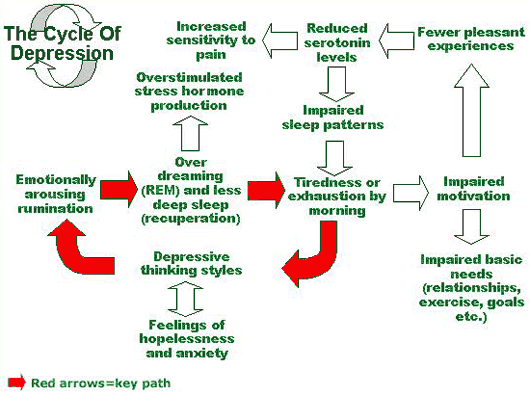
Atypical depression (AD) is a psychological condition that differs slightly from standard clinical depression. AD is defined by mood swings that are affected by negative and positive events. This is referred to as “mood reactivity”. Common symptoms of AD also include excessive sleeping, fatigue, feelings of being overwhelmed, overeating and trouble with rejection and social interaction.
A recent study was presented at the 2009 Experimental Biology Conference that reported an anti-depressant effect of a specific form of chromium, a trace mineral. The basis for this claim was a trial conducted with diabetic and obese rats. The researchers supplemented the diets of some of these rats with chromium histidine. This addition led to decreased carbohydrate consumption and an increase in serotonin levels in the brains of the rats. Serotonin is a neurotransmitter (chemical messenger) that most conventional antidepressant medications seek to increase in the brain.
This isn’t the first time chromium has been tied to an improvement in mood. In September 2005, a study appeared in the Journal of Psychiatric Practice that demonstrated similar effects in 70 adults with atypical depression. (1) Here are some of the specifics of the study:
- Most of the participants were classified as being overweight or obese.
- 600 mcg of chromium picolinate was administered daily to the 70 members of the test group.
- 40 “control” volunteers also took part in the research, receiving a placebo instead of chromium.
- The degree of depression was measured by utilizing two tests: 1) the Hamilton Depression Rating Scale and; 2) Clinical Global Impressions Improvement Scale
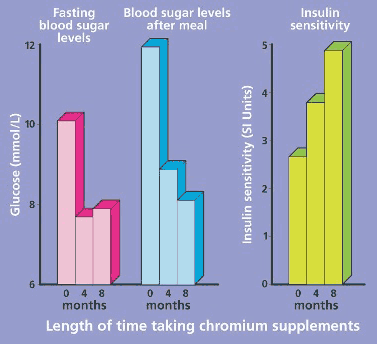
The group receiving the chromium found several key benefits – a decrease in appetite and overeating, reduced carbohydrate cravings and fewer mood swings. Those who started the study craving carbohydrates the most, improved the most in their Hamilton Depression Rating Scale. This also further strengthens the firmly established benefits of chromium in balancing blood sugar and improving insulin resistance.
In 2003, a smaller “pilot” study conducted at Duke University similarly found that 600 mcg of chromium picolinate improved “major atypical depressive disorder” in 70% of the participants. The authors of that study noted chromium’s insulin sensitizing effect and an impact on serotonin concentrations. In both of these experiments, chromium supplementation was well tolerated. (2)
A number of animal studies also confirm an antidepressant, antidiabetic and anxiolytic (anti-anxiety) effect in rats that undergo a variety of mental tests. The tests are used to determine energy levels, fear, mental function and motivation. (3,4,5)
Balancing Blood Sugar Supports a Healthy Mood and Lessens Carbohydrate Cravings
Finally, I want to mention a paper that appeared in the April 2007 issue of the Medical Hypotheses. It draws a link between several nutritional deficiencies that may contribute to both acne and depression. The authors note that acne can bring about “significant psychological disability” including anger, anxiety and depression. They also note that those with both acne and mood disorders are often lacking in key nutrients such as chromium, omega-3 fatty acids and zinc. By addressing these nutritional needs, the symptoms of these seemingly disparate conditions may “miraculously” improve. (6,7)
Those who suffer from depression are frequently overweight or obese. Carbohydrate laden foods are easily accessible ways of comforting an aching psyche. But this “solution” ultimately leads to more despair and very real health complications such as diabetes and heart disease. In chromium, we find a possible ally that may help tame unhealthy cravings, while at the same time stabilizing troublesome shifts in mood.
Be well!
JP
Tags: Chromium, Depression, Nutrition
Posted in Diet and Weight Loss, Mental Health, Nutritional Supplements
April 30th, 2010 at 9:46 am
JUST WHEN WE THOUGHT WE COULD BE GUILT-FREE ABOUT CHOCOLATE.
Chocolate and Depressive Symptoms in a Cross-sectional Analysis
Natalie Rose, MD; Sabrina Koperski, BS; Beatrice A. Golomb, MD, PhD
Arch Intern Med. 2010;170(8):699-703.
Background Much lore but few studies describe a relation of chocolate to mood. We examined the cross-sectional relationship of chocolate consumption with depressed mood in adult men and women.
Methods A sample of 1018 adults (694 men and 324 women) from San Diego, California, without diabetes or known coronary artery disease was studied in a cross-sectional analysis. The 931 subjects who were not using antidepressant medications and provided chocolate consumption information were the focus of the analysis. Mood was assessed using the Center for Epidemiologic Studies Depression Scale (CES-D). Cut points signaling a positive depression screen result (CES-D score, ≥16) and probable major depression (CES-D score, ≥22) were used. Chocolate servings per week were provided by 1009 subjects. Chocolate consumption frequency and rate data from the Fred Hutchinson Food Frequency Questionnaire were also available for 839 subjects. Chocolate consumption was compared for those with lower vs higher CES-D scores. In addition, a test of trend was performed.
Results Those screening positive for possible depression (CES-D score ≥16) had higher chocolate consumption (8.4 servings per month) than those not screening positive (5.4 servings per month) (P = .004); those with still higher CES-D scores (≥22) had still higher chocolate consumption (11.8 servings per month) (P value for trend, <.01). These associations extended to both men and women. These findings did not appear to be explained by a general increase in fat, carbohydrate, or energy intake.
Conclusion Higher CES-D depression scores were associated with greater chocolate consumption. Whether there is a causal connection, and if so in which direction, is a matter for future prospective study.
http://archinte.ama-assn.org/cgi/content/short/170/8/699
April 30th, 2010 at 1:13 pm
Iggy,
This is unlikely cause for concern, IMO – unless this research is backed up by future intervention trials. Here’s why: Chocolate appears to provide an antidepressant effect according to some studies. If that’s so, it only makes sense that the more depressed participants would gravitate to it frequently.
Those with infrequent or non-existent low-mood states simply don’t require dietary antidepressants. However those who regularly feel down would benefit from a steadier stream of dietary “pick me ups”.
http://www.ingentaconnect.com/content/maney/nns/2008/00000011/00000006/art00004?token=004713f2b0441333c4a2f7a406a2d384746282376465f4f6d6222346b626876305021d2
http://www.nature.com/ejcn/journal/v62/n2/abs/1602707a.html
http://bjp.rcpsych.org/cgi/content/full/191/4/351
Be well!
JP
September 30th, 2011 at 9:47 pm
Fabulous, JP! This makes so much sense. Thank you!
September 30th, 2011 at 11:56 pm
Thank you, Orna! 🙂
Be well!
JP