

Krill Oil Research
July 3, 2009 Written by JP [Font too small?]When selecting nutritional supplements we all strive to use the most effective products available. But what should we base that determination on? One option is to ask others about their personal experiences. This is commonly referred to as anecdotal evidence. Another source of data can be found in the scientific literature. Here we’re trusting that researchers are performing well designed and impartial research in a more controlled manner. Since these types of studies typically involve larger groups of people, the results may apply to broad segments of the population. But there’s another very prevalent manner of learning about dietary supplements and that is information provided by the manufacturers themselves. My contention is that we ought to examine all three sources of input. Ask questions of your colleagues, family and friends. Read the product literature provided by nutraceutical companies and pose any inquires that you might have. Finally, investigate whether modern science has produced any evidence to back up the other two sources. I’ll apply this model to examine an area of debate that’s currently active in the natural health community: Is krill oil superior to fish oil?

Krill oil is a supplemental source of powerful antioxidants, omega-3 fatty acids and phosholipids derived from tiny crustaceans harvested largely in the Southern Ocean waters of the Antarctic. Krill oil proponents claim that it is essentially a superior form of omega-3s. Krill contain a rather unique reddish antioxidant called astaxanthin, and they’re also rich in phospholipids, which help emulsify fatty acids and enhance their absorption and retention.
A new study presented in the Journal of Nutrition appears to support this point of view. Research conducted in a group of overweight rats found that krill oil provoked a 42% decrease in fat (triglyceride) build-up in the hearts of the test rats. Fish oil only lead to a marginal decline in cardio-lipids of 2%. When the authors of the study examined the livers of these animals, they discovered a 60% reduction in fat in their livers, as opposed to 38% in the livers of rats fed fish oil. The normalization of fat content in the heart and liver indicate potential benefits to overall heart function and an improvement in insulin sensitivity, which can be impaired in cases of fatty liver disease. In addition, the krill oil test subjects exhibited positive changes associated with a reduced “inflammatory response”. (1,2)
A study from 2008 demonstrated anti-cancer and heart benefits in relation to krill oil (KO) supplementation. In that trial, rats who were fed KO showed weight loss and a drop in LDL “bad” cholesterol, total cholesterol and triglyceride levels. The scientists also tested krill oil in an in-vitro model of colon cancer. The scientists concluded that, “Treatment of colon cancer cells with KO also resulted in time-dependent inhibition of cell growth”. (3)
Krill oil has also been evaluated in other health conditions as well. The results of those studies have all been positive and, in a roundabout way, can be applied to what we currently know about heart disease.
- In 2007, a paper was published in the Journal of the American College of Nutrition. 90 participants with heart disease and/or arthritis (osteo or rheumatoid) with elevated CRP (C-reactive protein) levels were provided with KO or a placebo for a 30 day period. CRP is a measure of inflammation in the body. By the 7th day of treatment with KO (300 mg daily), there was a 19% drop in CRP levels. The placebo group exhibited a 16% increase in CRP. By the 30th day of treatment, there was a 31% reduction in CRP in the krill oil group and a 32% rise in CRP in the placebo group. In the arthritic patients, there were significant improvements in pain and stiffness scores, and a trend towards “reduced functional impairment”. (4)
- A 2003 study on 70 women with PMS and dysmenorrhea (painful menstruation) found that those taking KO for a total of 90 days demonstrated reduced discomfort, pain and emotional symptoms relating to PMS. This experiment compared equal dosages of KO vs. fish oil – 2 grams daily for the first 30 days and then 2 grams daily for 8 days prior to menstruation and during the first 2 days of the menstrual cycle. (5)
Chronic inflammation is now believed to be a contributing factor in many cancers and cardiovascular disease. The fact that KO appears to reduce inflammatory markers and symptoms may provide a clue to part of its cardioprotective effect. A human trial from 2004 is perhaps the strongest piece of evidence that supports the krill/heart health link. That study produced a profoundly positive shift in cardiovascular risk factors in a group of 120 volunteers. A starting KO dosage of 500 mg daily reduced blood sugar levels, LDL, total cholesterol and triglycerides, and raised the beneficial HDL cholesterol in the participants. The men and women who were given fish oil didn’t fare nearly as well. (6)
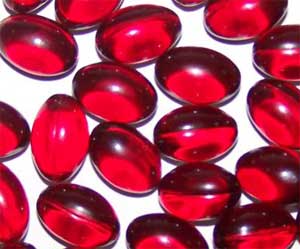 There are several other important factors to consider when comparing fish oil and krill oil. Preliminary studies going back to the mid 90s demonstrate that krill oil appears to be safe. (7) However, some manufacturers and health authorities caution that those with severe shellfish allergies should discuss krill oil with their physicians prior to usage. It’s also important to note that fish oil has been studied extensively over the past several decades. Literally thousands of research papers have been published on the health effects of omega-3 fatty acids found in fish. Fewer than 10 studies on krill oil have been presented in peer reviewed medical journals.
When I looked over all of the reliable data I could find about krill oil, I came to the following conclusion. Krill oil seems to be an extremely promising antioxidant/omega-3 supplement. Substantial evidence suggests that the astaxanthin content of krill largely contributes to its net effect. (8,9,10) Astaxanthin is the same carotenoid that gives wild salmon its pink hue. But there may also be something to the phospholipid content of this crustacean. That’s the only explanation I’ve found as to why a lower dosage of KO could produce equal or greater effects than higher dosages of fish oil.
Be forewarned: Krill oil can be quite expensive. The real question is how much you’ll need to take to derive the same benefits as I’ve reported here. If you need a lower dosage, such as 500 mg, then it can be relatively affordable. But some users may require larger quantities (2-3 grams a day). The best deal I’ve found online costs roughly $20 for 90 (500mg) softgels. I think at that price, it’s certainly worth a shot for anyone who might benefit from it. I also think that KO may be an attractive alternative, because krill softgels are typically smaller in size and have a milder aroma. The issue of smell and taste can be further helped by freezing the KO and swallowing the frozen capsules. This is a good technique for taking any softgels with a strong after-taste.
Update: March 1, 2010 – Recent Internet reports about supposed “krill oil dangers” do not appear to be coming from reliable sources. I’ve been keeping a close eye on the scientific literature and I haven’t found any evidence of new concerns regarding krill.
Note: Please check out the “Comments & Updates” section of this blog – at the bottom of the page. You can find the latest research about this topic there!
Be well!
JP
Tags: Arthritis, Fish Oil, Inflammation
Posted in Alternative Therapies, Heart Health, Nutritional Supplements
August 24th, 2015 at 1:31 pm
Hi Sam,
I doubt I’ll be able to address all of your thoughtful questions. I’m juggling quite a lot at the moment. But, I’ll try to offer up some useful information.
As far as I know, there haven’t been any peer-reviewed, published studies on krill oil in felines.
Here’s a recent review (with contributions from Aker – makers of Superba krill oil) that summarizes the current state of research re: krill and animals.
http://www.ncbi.nlm.nih.gov/pmc/articles/PMC4446753/
There’s some promising, but preliminary data on astaxanthin in cats:
http://www.sciencedirect.com/science/article/pii/S0165242711003497
Other sources of omega-3, besides krill, may be useful:
http://onlinelibrary.wiley.com/doi/10.1111/j.1939-1676.2010.0495.x/full
I’d be interested in hearing what Tharos has to say. If you can, please share it here. In the meantime, I can tell you that there have been two brands of krill oil tested in relation to arthritis: NKO and Superba.
http://www.ncbi.nlm.nih.gov/pubmed/17353582
http://www.ncbi.nlm.nih.gov/pmc/articles/PMC2907316/
Unless something has changed, I believe that NKO adds some algae-derived astaxanthin to their product. Superba only contains, a small amount, of krill-derived astaxanthin.
Lastly, you might find the following blogs of interest:
https://www.healthyfellow.com/1837/natural-health-for-cats/
https://www.healthyfellow.com/1337/natural-medicine-for-cats/
Be well!
JP
August 26th, 2015 at 5:07 am
Thankyou for all the links JP.
I certainly will let you know more if Tharos get back to me.
Through reading this thread, I was of the understanding that NKO\’s astaxanthin content was solely derived from krill, and that the reason it was higher than the others was due to an additional extraction method they employed? If this is not the case, do you know how much of their astaxanthin is from KO, and how much from microalgae please?
Regards, Sam
August 26th, 2015 at 2:44 pm
Hi Sam,
I may be mistaken, but I think NKO adds algae-derived astaxanthin to their krill oil. I suspect the majority of the astaxanthin in NKO (and other brands such as K-Real) is from algae. This is a more cost effective way to maintain consistent levels of the carotenoid.
Primarily, I’m basing this on conversations I had a long while back with several krill insiders. IMO, it’s unlikely much has changed.
Be well!
JP
November 6th, 2015 at 7:32 pm
Updated 11/06/15:
http://www.lipidworld.com/content/14/1/142
Lipids Health Dis. 2015 Nov 4;14(1):142.
Supplementation of krill oil with high phospholipid content increases sum of EPA and DHA in erythrocytes compared with low phospholipid krill oil.
BACKGROUND: Bioavailability of krill oil has been suggested to be higher than fish oil as much of the EPA and DHA in krill oil are bound to phospholipids (PL). Hence, PL content in krill oil might play an important role in incorporation of n-3 PUFA into the RBC, conferring properties that render it effective in reducing cardiovascular disease (CVD) risk. The objective of the present trial was to test the effect of different amounts of PL in krill oil on the bioavailability of EPA and DHA, assessed as the rate of increase of n-3 PUFA in plasma and RBC, in healthy volunteers.
METHODS AND DESIGN: In a semi randomized crossover single blind design study, 20 healthy participants consumed various oils consisting of 1.5 g/day of low PL krill oil (LPL), 3 g/day of high PL krill oil (HPL) or 3 g/day of a placebo, corn oil, for 4 weeks each separated by 8 week washout periods. Both LPL and HPL delivered 600 mg of total n-3 PUFA/day along with 600 and 1200 mg/day of PL, respectively.
RESULTS: Changes in plasma EPA, DPA, DHA, total n-3 PUFA, n-6:n-3 ratio and EPA + DHA concentrations between LPL and HPL krill oil supplementations were observed to be similar. Intake of both forms of krill oils increased the RBC level of EPA (p < 0.001) along with reduced n-6 PUFA (LPL: p < 0.001: HPL: p = 0.007) compared to control. HPL consumption increased (p < 0.001) RBC concentrations of EPA, DPA, total and n-3 PUFA compared with LPL. Furthermore, although LPL did not alter RBC n-6:n-3 ratio or the sum of EPA and DHA compared to control, HPL intake decreased (p < 0.001) n-6:n-3 ratio relative to control with elevated (p < 0.001) sum of EPA and DHA compared to control as well as to LPL krill oil consumption. HPL krill oil intake elevated (p < 0.005) plasma total and LDL cholesterol concentrations compared to control, while LPL krill oil did not alter total and LDL cholesterol, relative to control. CONCLUSIONS: The results indicate that krill oil with higher PL levels could lead to enhanced bioavailability of n-3 PUFA compared to krill oil with lower PL levels. Be well! JP
December 15th, 2015 at 4:31 pm
Updated 12/15/15:
http://www.lipidworld.com/content/14/1/163
Lipids in Health and Disease 2015, 14:163
Krill oil reduces plasma triacylglycerol level and improves related lipoprotein particle concentration, fatty acid composition and redox status in healthy young adults – a pilot study
Background: Lipid abnormalities, enhanced inflammation and oxidative stress seem to represent a vicious circle in atherogenesis, and therapeutic options directed against these processes seems like a reasonable approach in the management of atherosclerotic disorders. Krill oil (RIMFROST Sublime®) is a phospholipid-rich oil with eicosapentaenoic acid (EPA): docosahexaenoic acid (DHA) ratio of 1.8:1. In this pilot study we determined if krill oil could favourable affect plasma lipid parameters and parameters involved in the initiation and progression of atherosclerosis.
Methods: The study was conducted as a 28 days intervention study examining effect-parameters of dietary supplementation with krill oil (832.5 mg EPA and DHA per day). 17 healthy volunteers in the age group 18–36 (mean age 23 ± 4 years) participated. Plasma lipids, lipoprotein particle sizes, fatty acid composition in plasma and red blood cells (RBCs), plasma cytokines, antioxidant capacity, acylcarntines, carnitine, choline, betaine, and trimethylamine-N-oxide (TMAO) were measured before and after supplementation.
Results: Plasma triacylglycerol (TAG) and large very-low density lipoprotein (VLDL) & chylomicron particle concentrations decreased after 28 days of krill oil intake. A significant reduction in the TAG/HDL cholesterol resulted. Krill oil supplementation decreased n-6/n-3 polyunsaturated fatty acids (PUFA) ratio both in plasma and RBCs. This was due to increased EPA, DHA and docosapentaenoic acid (DPA) and reduced amount of arachidonic acid (AA). The increase of n-3 fatty acids and wt % of EPA and DHA in RBC was of smaller magnitude than found in plasma. Krill oil intake increased the antioxidant capacity, double bond index (DBI) and the fatty acid anti-inflammatory index. The plasma atherogenicity index remained constant whereas the thrombogenicity index decreased. Plasma choline, betaine and the carnitine precursor, γ-butyrobetaine were increased after krill oil supplementation whereas the TMAO and carnitine concentrations remained unchanged.
Conclusion: Krill oil consumption is considered health beneficial as it decreases cardiovascular disease risk parameters through effects on plasma TAGs, lipoprotein particles, fatty acid profile, redox status and possible inflammation. Noteworthy, no adverse effects on plasma levels of TMAO and carnitine were found.
Be well!
JP
June 13th, 2016 at 8:32 pm
Updated 06/13/16:
http://www.ncbi.nlm.nih.gov/pmc/articles/PMC4889684/
Arch Med Sci. 2016 Jun 1;12(3):507-12.
Lipid-lowering and anti-inflammatory effects of omega 3 ethyl esters and krill oil: a randomized, cross-over, clinical trial.
INTRODUCTION: Polyunsaturated fatty acids (PUFAs) derived from different sources could have different lipid-lowering effects in humans. The main aim of our study was to compare the short-term triglyceride-lowering efficacy of krill oil and purified omega 3 ethyl ester PUFAs in mildly overweight hypertriglyceridemic subjects.
MATERIAL AND METHODS: This double-blind, randomized clinical trial was carried out in 25 moderately hypertriglyceridemic subjects (TG = 150-500 mg/dl). After a 4-week run-in, participants were allocated to treatment with similar pills containing omega 3 ethyl ester PUFAs 1000 mg twice a day vs. krill oil 500 mg twice a day. After 4 weeks of treatment, participants were asked to observe a 4-week wash-out period, and they were then assigned to the alternative treatment for a further period of 4 weeks.
RESULTS: Although both PUFA sources were able to improve TG plasma levels, esterified omega 3 PUFAs were more efficacious than krill oil (p < 0.05). Nonetheless, only krill oil treatment was able to significantly improve high-density lipoprotein cholesterol and apolipoprotein AI levels, compared to both baseline (p < 0.05) and end of treatment with esterified omega 3 PUFAs (p < 0.05) values. Both treatments were able to significantly reduce high-sensitivity C-reactive protein (hs-CRP) levels from the baseline (p < 0.05), but krill oil improved it more efficaciously than esterified omega 3 PUFAs (p < 0.05). CONCLUSIONS: Krill oil has lipid-lowering effects comparable with those obtained through a 4-fold higher dose of purified omega 3 ethyl ester PUFAs in mildly overweight hypertriglyceridemic subjects, while more efficaciously reducing hs-CRP. Be well! JP
October 26th, 2016 at 7:43 pm
Note: The krill oil used in this study is manufactured by Aker and is sold by the trade name, Superba.
Updated 10/26/16:
http://journals.plos.org/plosone/article?id=10.1371/journal.pone.0162769
PLoS One. 2016 Oct 4;11(10):e0162769.
Krill Oil Improves Mild Knee Joint Pain: A Randomized Control Trial.
BACKGROUND: Krill oil is an edible oil extracted from krill, a small red-colored crustacean found in the Antarctic Ocean. The administration of krill oil is reported to mitigate inflammation in patients with cardiac disease, rheumatoid arthritis, or osteoarthritis. However, the effect of krill oil on mild knee pain has not yet been determined.
OBJECTIVE: To assess the effect of krill oil on mild knee pain.
DESIGN: A randomized, double-blind, parallel-group, placebo-controlled trial of fifty adults (38-85 years old) with mild knee pain attending the Fukushima Orthopedic Clinic (Tochigi, Japan) between September 2014 and March 2015.
INTERVENTIONS: Participants were randomized to receive 2 g per day of either krill oil or an identical placebo for 30 days.
OUTCOMES: The primary outcome was improvement in subjective symptoms of knee pain as assessed by the Japanese Knee Osteoarthritis Measure (JKOM) and Japanese Orthopaedic Association score (JOA). Secondary outcomes included blood and urine biochemical parameters.
RESULTS: Both the placebo and krill oil groups showed significant improvements in the questions in the JKOM and JOA questionnaires after administration. After the intervention, krill oil group showed more improvements than placebo group in two questions regarding the pain and stiffness in knees in JKOM. Controlling for age, sex, weight, and smoking and drinking habits, krill oil significantly mitigated knee pain in sleeping (P < 0.001), standing (P < 0.001) and the range of motion of both right and left knees (both P = 0.011) compared to placebo. Krill oil administration raised plasma EPA (P = 0.048) and EPA/AA ratio (P = 0.003). CONCLUSION: This study indicates that krill oil administration (2 g/day, 30 days) improved the subjective symptoms of knee pain in adults with mild knee pain. Be well! JP